REWIND
What is slowed and reverb music?
Slowed and reverb music is an existing song played back more slowly, usually by 10 to 25 percent, with a long reverb added. The slower speed lowers the pitch and stretches the beat, and the reverb adds a washed, hall-like space. It grew from chopped and screwed remixes and took off on YouTube in the late 2010s.
Download free on iPhoneSee all 30 machines
8 machines free forever · no account · works offline
What does slowed and reverb mean?
Two simple effects are stacked on a track. Slowed means the song runs at a lower speed, and if the speed and pitch are tied together, as on a record or tape, the voice drops in pitch as well. Reverb means the sound is fed through a space simulation so each note leaves a tail, like a large room. The result feels dreamy, heavy and a little sad, which is why it fits late-night listening.
Where does slowed and reverb come from?
The style traces back to chopped and screwed music from Houston, Texas, which DJ Screw pioneered and which became a staple of the city's hip hop scene in the 1990s. The chopped and screwed article describes the genre and its slowed and reverb offshoot, which it says derives from chopped and screwed and vaporwave. It credits Houston producer Jarylun Moore, known as slater!, with uploading such remixes to YouTube from 2017. The style then spread to TikTok and streaming playlists.
Credit became a debate. In mid-2020 a viral TikTok video failed to mention chopped and screwed, and critics called slowed and reverb a gentrified version of it. If you enjoy the sound, it is worth learning where it came from.
How is slowed and reverb music made?
For an app-by-app comparison, see best slowed and reverb apps for iPhone.
- Pick a song you own as a file.
- Open an audio editor, such as Audacity, or a slowed-and-reverb app.
- Reduce the speed. Many tracks use about 10 to 25 percent slower. With pitch linked to speed, the song also sounds lower.
- Add a reverb effect with a long decay, often between 2 and 5 seconds.
- Balance the dry and wet mix so the voice is still clear, and trim the loud peaks.
- Export the file for yourself. Uploading someone else's song publicly raises copyright questions.
Why does slowed and reverb sound the way it does?
Slowing a recording lowers every frequency in proportion, so a singer sounds deeper and the drums feel heavier. It is the same effect as playing a 45 rpm single at 33⅓ rpm, only milder. Slow playback also gives each note more time to ring, so a song feels roomier. Reverb adds hundreds of tiny echoes that blur the attack of each sound. The combination masks fast details and highlights mood, which is why the sound suits both study playlists and dramatic edits.
A fixed ratio is a useful reference. A speed drop of 15 percent lowers pitch by about 2.8 semitones, nearly a minor third. That is the amount REWIND's Slowed + Reverb switch applies.
What is the difference between slowed and reverb, sped up, and nightcore?
| Style | Speed | Pitch | Typical effect |
|---|---|---|---|
| Slowed and reverb | Slower | Lower (if linked) | Dreamy, heavy, with a long tail |
| Chopped and screwed | Much slower, with cuts and scratches | Lower | Syrupy Houston style |
| Sped up | Faster | Higher | Energetic, bright |
| Nightcore | Faster | Higher | Chipmunk-like pop |
| Lo-fi | Normal | Normal | Warm noise, hiss, crackle (see what is lo-fi music) |
How do you hear slowed and reverb on iPhone?
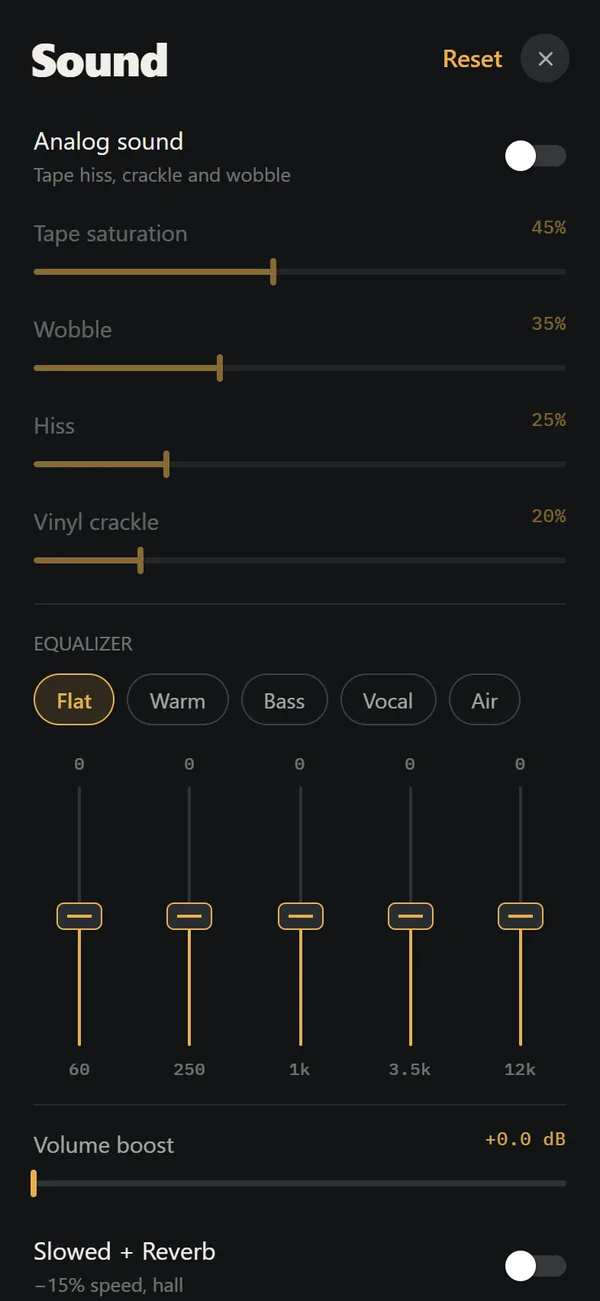
The quick way is a live player. REWIND has one Slowed + Reverb switch in the sound controls. It lowers the speed by 15 percent, so the pitch drops with it, and adds a hall reverb on files you own. A reverb depth slider runs from off through room and hall to cathedral. A separate Sped up switch (20 percent faster, higher pitch) covers the nightcore side, and 8D audio circles the sound between your ears. Slowed and Sped up cannot run together. Analog sound and the equalizer work alongside them. Slowed + Reverb, Sped up, reverb depth and 8D audio are REWIND PRO features, and pitch always follows speed. The how-to is in slowed and reverb any song on iPhone, and the feature page is Slowed + Reverb.
If you want exact numbers or an exported file, an editor such as Resonance or Music Speed Changer gives you that. Both appear in our comparison page.
Can you do it with Apple Music or Spotify songs?
Not inside third-party apps. Streaming downloads are DRM-protected, so a slowed and reverb app cannot open them. You need files you own. We explain this in can you slow down Apple Music songs on iPhone, and where to buy DRM-free music lists stores.
Why is slowed and reverb so popular?
It is cheap to make, easy to share and good at changing mood. A fast pop song becomes a slow dream, and a familiar sound becomes strange again. It also fits the way people listen now, with a song looping in the background while they study, work or drive at night. Short video apps helped, since a clip with a slowed song under it feels instantly emotional.
There is also a simple musical reason. Lowering the speed shifts a song into a different register, and the long reverb fills the gaps between notes. Together they hide the hard edges of modern production. Fans say it reveals feelings that the original tempo covers. Some critics call it a lazy remix. Both sides agree that it is a distinct sound, which is all a definition needs.
How can you tell if a track is slowed and reverb?
The last point is useful if you want to check numbers. Divide the original length by the speed factor, and you get the new length. At 85 percent speed, 180 seconds becomes about 212 seconds.
- The vocals sound lower than the artist's normal voice.
- The drums land slower, but the groove is intact.
- Every snare and note has a long tail.
- The upload title includes "slowed", "reverb", "+ reverb" or "s+r".
- The song is longer than the original by about the same percentage as the slowdown. A 15 percent slowdown makes a 3:00 song run to about 3:32.
Is slowed and reverb legal to share?
Making a slowed version for yourself is fine in most places. Posting one publicly uses someone else's recording and composition, so labels and platforms may block or monetize it. Get permission or use your own music if you want to publish.
Definition in one line: slowed and reverb is a song at lower speed with a big, washy reverb.
Frequently asked questions
What does slowed and reverb mean?
It means a song is played at a slower speed and processed with a long reverb. Slowing also lowers the pitch when speed and pitch are tied.
Who invented slowed and reverb?
The internet format took shape in the late 2010s from chopped and screwed and vaporwave. Producer slater! uploaded popular early examples to YouTube in 2017. Chopped and screwed itself comes from Houston and DJ Screw in the 1990s.
How much slower is slowed and reverb?
Often 10 to 25 percent. REWIND's switch uses 15 percent.
What is the difference between slowed and reverb and chopped and screwed?
Chopped and screwed adds cuts, repeats and scratches at a much lower speed. Slowed and reverb simply slows the track and adds reverb.
How do I make slowed and reverb songs on iPhone?
Use an app that works on your own audio files, such as an editor or REWIND's live switch. DRM-protected streaming tracks cannot be used.
Keep exploring
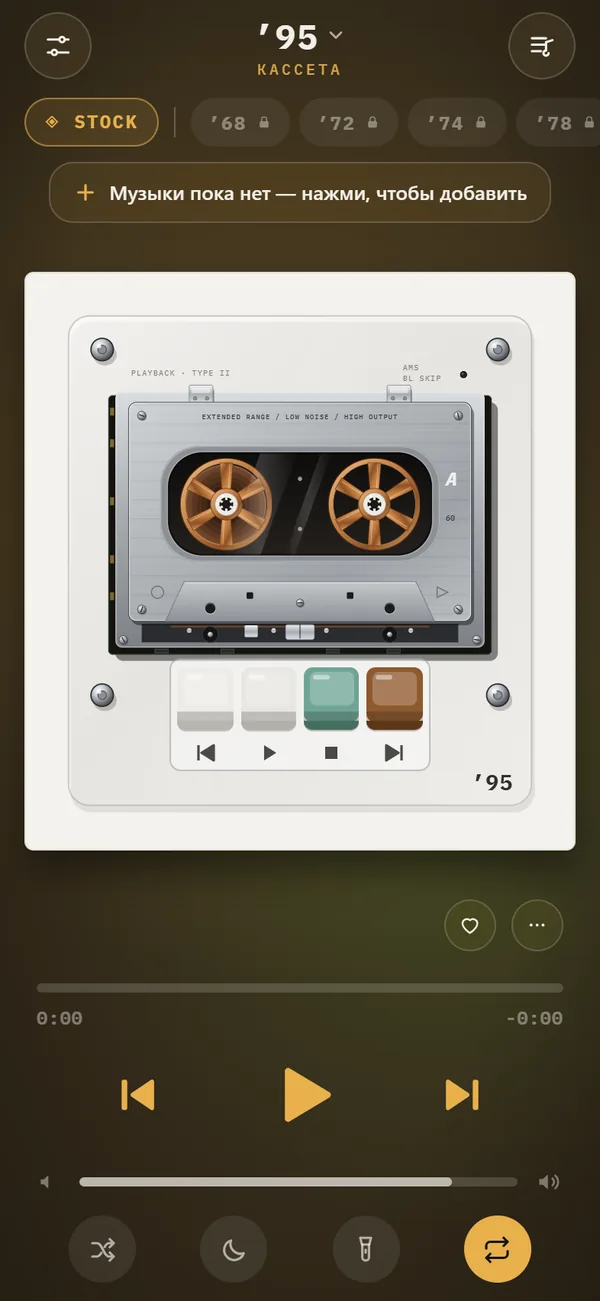 Slowed + Reverb, Sped Up and 8D Audio on iPhoneSlowed, Sped up, reverb depth from room to cathedral and 8D audio, live on your own files. REWIND PRO.
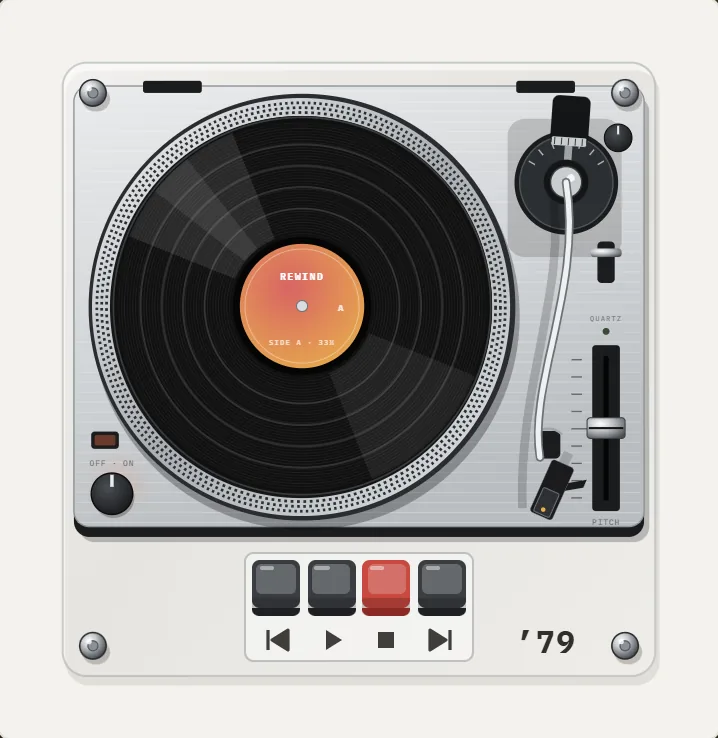 Slowed and Reverb Any Song on iPhone, LiveWhat slowed and reverb is, where the style came from, and how to apply it live to your own music on iPhone.Best Slowed and Reverb Apps for iPhoneSlowed and reverb apps for iPhone compared: live players versus editors, price, ratings and which handle your own files, October 2026.Can You Slow Down Apple Music Songs on iPhone?What works and what is blocked when you slow down Apple Music or Spotify songs on iPhone, and how to get a slowed and reverb version legally.
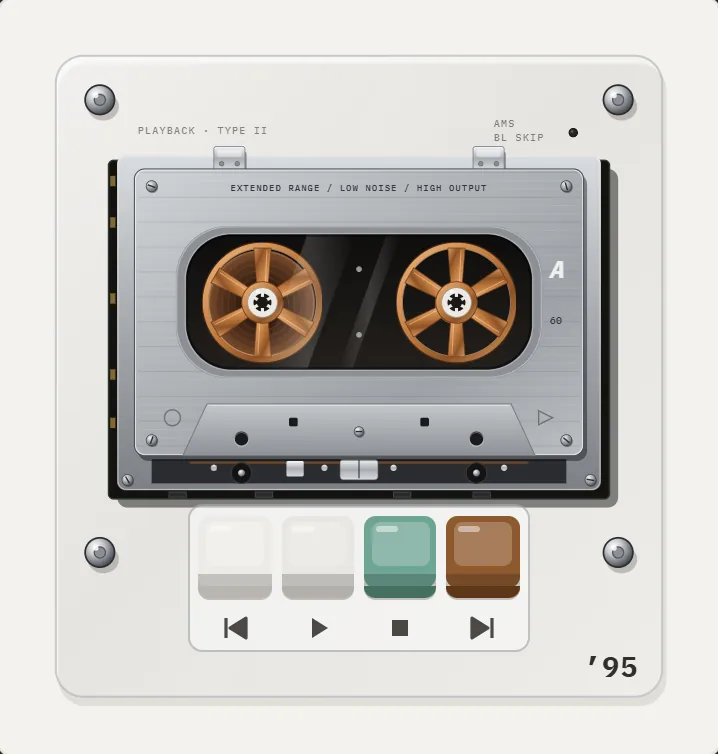 What Is Lo-Fi Music? Hiss, Crackle and ImperfectionWhat lo-fi music means, where the term came from, which sounds define it and how to get the lo-fi sound from your own files.
 Why Old Music Sounds WarmTape saturation, vinyl limits, tube harmonics and the ear itself: the causes of warm sound, and how much of it is taste.