REWIND
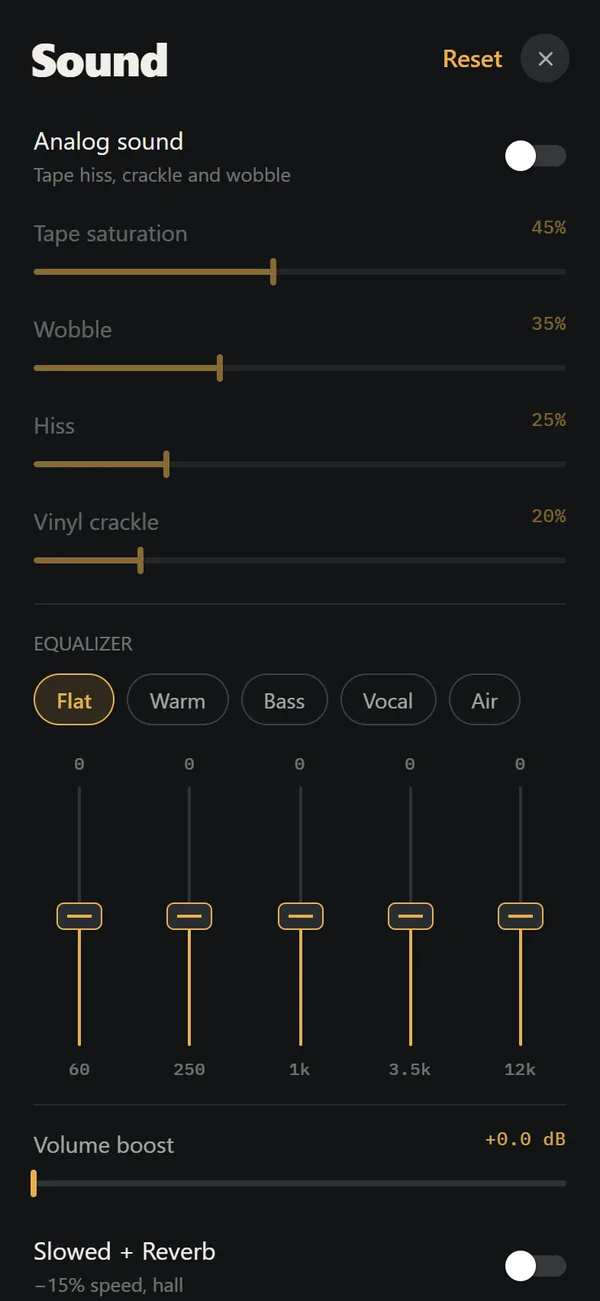
Analog sound for your own music: saturation, wobble, hiss, crackle
REWIND's analog sound is one switch with four sliders: tape saturation, wobble, hiss and vinyl crackle. Two more free options sit beside it: machine sound, which gives each machine its own warm profile, and lo-fi radio. All of it runs live on your own files, offline.
Download free on iPhoneSee all 30 machines
8 machines free forever · no account · works offline
What does the analog sound switch do?
It adds the character of old playback gear to any track in your library. The effect runs live while the song plays, so you can flip it on and off mid-chorus and hear the difference at once. Nothing is saved back to your files; the original stays untouched.
The switch lives on the sound screen. Under it sit four sliders, and each one maps to a flaw people remember from real machines. You decide how much of each you want, from a faint warmth to a properly beaten-up tape.
The four sliders, one by one
Each slider is independent.
- Tape saturation: soft clipping that rounds off peaks and thickens the low mids, the way a hot signal pushed into magnetic tape does. Small amounts feel glued together; large amounts get fuzzy.
- Wobble: slow and fast pitch drift, known as wow and flutter. It is what made old cassettes sway slightly out of tune. Read more in what wow and flutter are.
- Hiss: the steady shhh of a tape playing in a quiet passage. Keep it low and it disappears into the music; raise it and the silence between songs gets a floor.
- Vinyl crackle: random ticks and pops, like dust in the groove. Pair it with a record machine for the full picture.
What are machine sound and lo-fi radio?
Machine sound is a single switch. When it is on, each machine type gets its own warm profile automatically as you switch machines. Cassette players and boomboxes wobble and hiss, decks and reel-to-reel have a gentle tape color, turntables crackle, and CD and MP3 players stay clean. You do not have to touch a slider for the machine to sound like itself.
Lo-fi radio narrows the sound to roughly 420 Hz to 3.2 kHz, the thin band of an old receiver or a small speaker in the next room. It is a filter rather than a noise effect, so it pairs well with saturation and hiss. Both options are free.
Why does it sound warmer?
Warmth is mostly distortion we like. Tape saturation adds low-order harmonics, which the ear reads as body and glue. Slight pitch movement keeps the sound from feeling frozen, and noise makes a track feel recorded in a room instead of generated. For the longer story, see why old music sounds warm and what tape saturation is.
None of this is more accurate than the original file. It is a matter of taste. Turn it off and you hear your file as it was mastered.
Does it work with every machine?
Yes. The analog sound switch sits on top of whichever machine you pick, whether that is a pocket cassette, a portable CD player or a turntable. The machine decides the look and the mechanical sounds; the sliders decide the tone. With machine sound on, the profile follows the machine automatically.
A few combinations feel natural. A cassette with saturation and a touch of wobble. A record machine with crackle. A late-90s CD player with everything at zero, if you want it clean. Nothing stops you from putting vinyl crackle on a cassette, either. The tape mechanics page explains the physical side of the machines.
Starting points to try
Sliders are easier to learn with a recipe. These are loose suggestions, not rules.
| Mood | Saturation | Wobble | Hiss | Crackle |
|---|---|---|---|---|
| Barely there warmth | Low | Off | Off | Off |
| Pocket-cassette mixtape | Medium | Low | Low | Off |
| Dusty record night | Low | Low | Off | Medium |
| Worn-out tape | High | High | Medium | Off |
Start with one slider, listen for ten seconds, then add the next.
Free, offline, and separate from the equalizer
Analog sound, machine sound and lo-fi radio are part of the free tier, together with the equalizer. The two work side by side: shape the frequencies first, then decide how worn the signal should feel. The PRO sound tools (Slowed, Sped up, reverb depth and 8D audio) are separate switches and do not replace either.
Everything is computed on the phone. There is no account, no upload and no analytics, so a song never leaves the device. The same goes for the mechanical clicks and the tape stop, which are synthesized on the device too.
Frequently asked questions
Does the analog sound change my original files?
No. The effect is applied live during playback. Your files in the library stay exactly as you imported them.
Is analog sound free in REWIND?
Yes. The analog sound switch and its four sliders are part of the free tier, along with the five-band equalizer.
Can I use analog sound with a turntable machine?
Yes. It works with every machine. Vinyl crackle pairs naturally with the record players, but any slider can be used on any machine.
What does wobble mean in the sound settings?
Wobble is wow and flutter, the small pitch drift of old tape and record players. Raise the slider for more drift, lower it for a steadier tone.
What is the machine sound switch?
It gives every machine type its own warm profile automatically: wobble and hiss on cassette players and boomboxes, tape color on decks, crackle on turntables, a clean sound on CD and MP3 players. It is free.
What does lo-fi radio do?
It narrows the sound to about 420 Hz to 3.2 kHz, like an old radio receiver. It is free and works on any machine.
Keep exploring
5-Band Equalizer for iPhone Music Files, FreeFive bands (60 Hz to 12 kHz) and five presets, applied in real time to your own files. Free. Slowed + Reverb, Sped Up and 8D Audio on iPhoneSlowed, Sped up, reverb depth from room to cathedral and 8D audio, live on your own files. REWIND PRO.
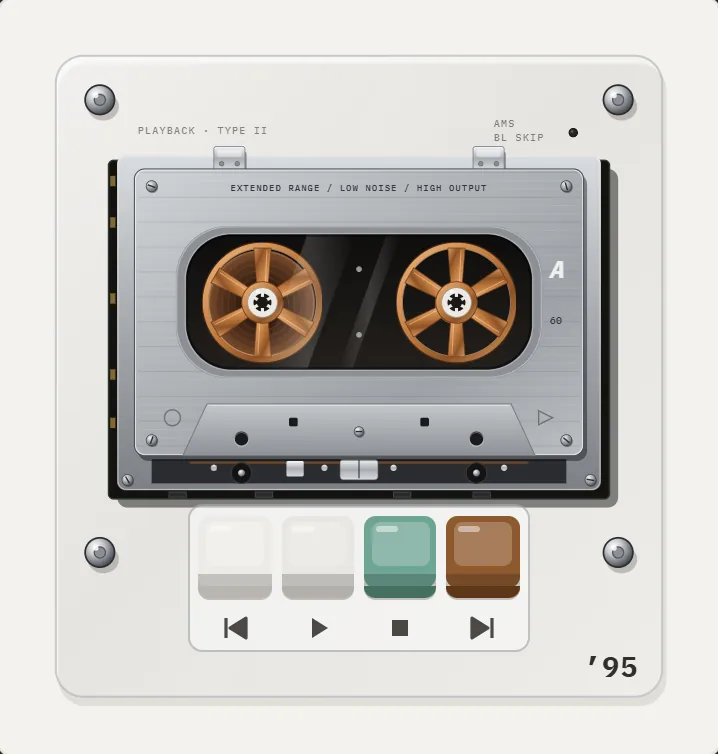 Tactile Retro ControlsSwipe to wind, finger to scratch, buttons that click, a real tape stop. Sounds are synthesized on device.
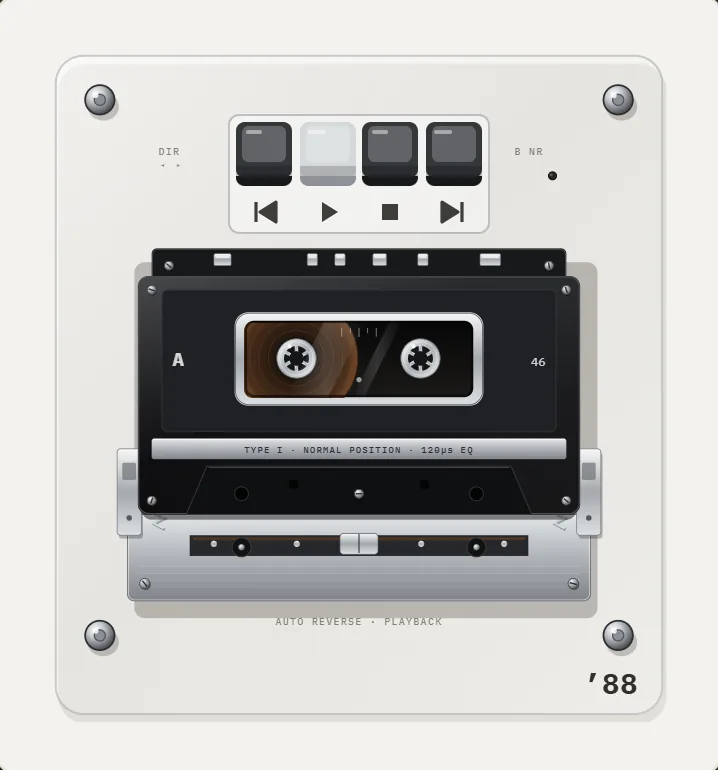 What Is Wow and Flutter? Tape and Vinyl Pitch DriftWhat causes wow and flutter, how it is measured in percent, and how to add a gentle amount back to digital music.
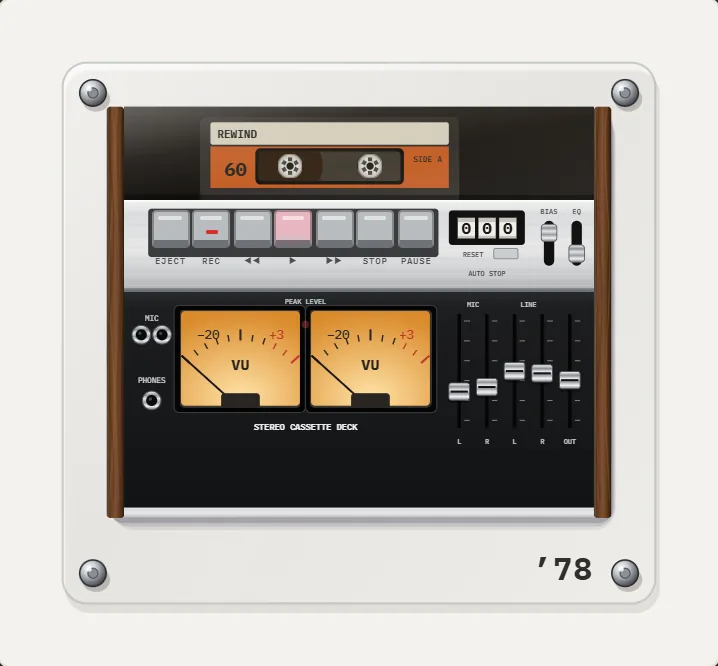 What Is Tape Saturation? The Sound of Magnetic TapeThe physics of tape saturation, why bias exists, what harmonics it adds, and how to set a tasteful amount.
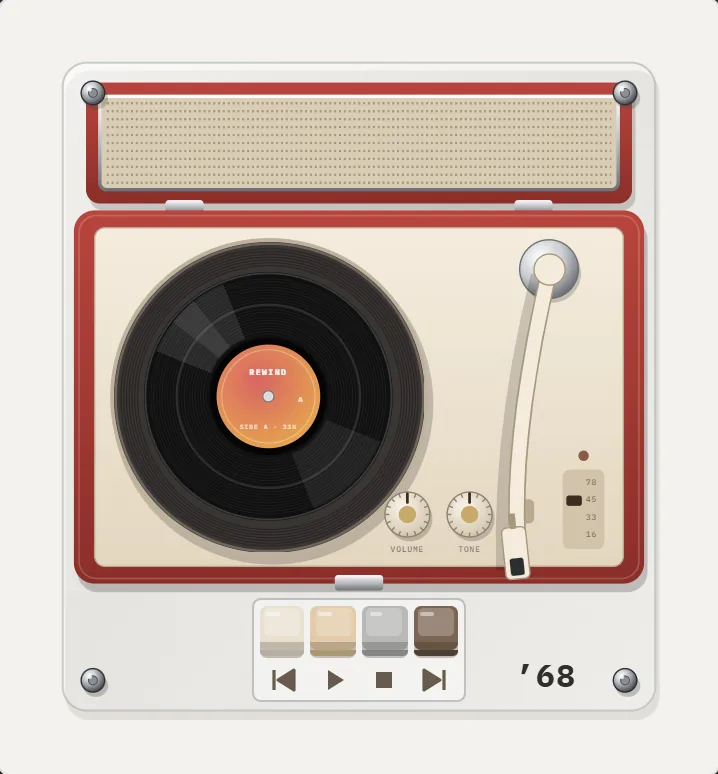 Why Vinyl CracklesThe physical reasons vinyl crackles, how a stylus reads a groove, and how to add or avoid the sound.