REWIND
What Is Wow and Flutter?
Wow and flutter are small, rapid changes in playback speed that make the pitch of recorded music waver. Slow drift is called wow, faster flicker is called flutter. They come from motors, belts, rollers and warped records, and they are a big part of why analog sound feels alive.
Download free on iPhoneSee all 30 machines
8 machines free forever · no account · works offline
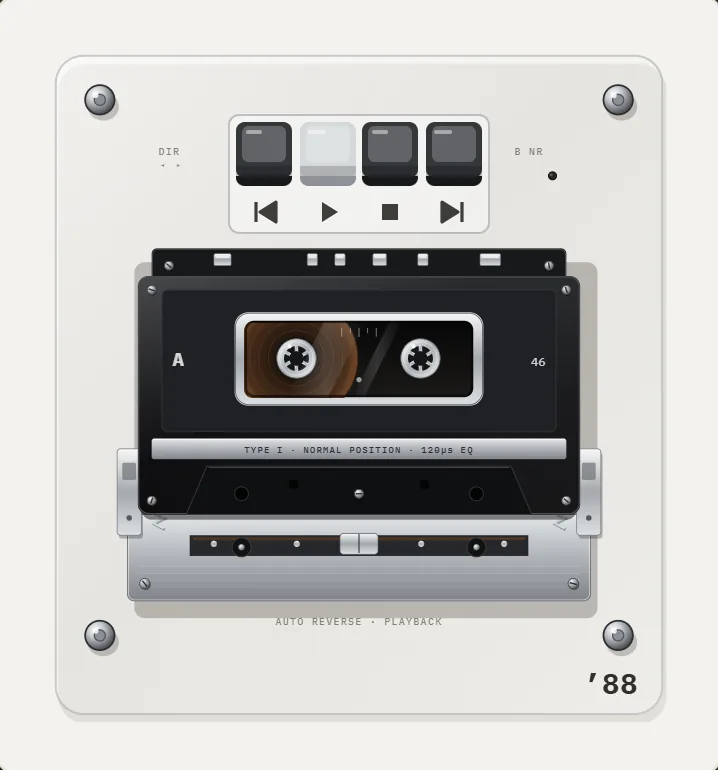
What is the difference between wow and flutter?
Both describe unwanted speed variation, and the dividing line is how fast the variation repeats. Wow is slow, below roughly 4 Hz, so you hear a long swell and sag in pitch, like a held piano note that sags and recovers. Flutter is faster, above 4 Hz, and sounds like a rough shimmer or tremble on the note (Wikipedia: Wow and flutter measurement).
Because speed and pitch are tied together on tape and vinyl, any change in speed is a change in pitch. A machine that runs 1 percent fast sounds about 17 cents sharp, and 0.1 percent is under 2 cents. Pure sustained tones, such as piano, organ and flute, expose the effect most.
What causes it on a cassette?
A cassette moves tape at 1.875 inches per second between two reels while a capstan and a rubber pinch roller pull it past the head (Wikipedia: Compact Cassette). Several things in that path can wobble the speed.
- A capstan that is slightly off-round turns the tape speed into a once-per-rotation pulse.
- A worn or dirty pinch roller grips unevenly.
- Weak motor control and aging belts change speed as the load changes.
- Stretched or creased tape, or a shell with uneven friction, slows and speeds the tape unpredictably.
- Low batteries in a portable machine lower motor speed over time.
What causes it on a record?
On vinyl the culprits differ. A record whose center hole is punched slightly off-center makes the stylus swing in and out as the platter turns, producing a once-per-rotation pitch wave at about 0.55 Hz for a 33⅓ rpm record. Warped records do the same. A weak motor or a worn drive belt adds variation, and so does a platter bearing that is dry or rough.
This explains one of the design arguments in turntable history: direct-drive and belt-drive layouts handle motor noise differently. We cover it in belt drive vs direct drive.
How is it measured?
Engineers play a test tone, usually 3,000 or 3,150 Hz, and measure how much its frequency moves. The result is a percentage, weighted to match how the ear hears speed variation. Hi-fi decks and turntables were advertised with figures like 0.1 percent weighted, and cheaper portables were worse. Professional tape machines reach about 0.02 percent.
Listeners find flutter most objectionable at 4 Hz, which is why the measurement standards share a weighting curve that peaks there. Slow wow and very fast flutter sound milder than the same percentage at 4 Hz. It is a good example of a number that only makes sense with the ear's quirks built in. The lesson for a listener is simple: lower numbers mean steadier pitch, and nothing real is ever at zero.
Why would anyone add it back?
A digital file has none. Its clock is crystal-steady, so the pitch never moves. That is clean and also slightly static. A touch of wobble gives music a sense of a physical object turning, and it blurs the sharpness of repeated notes in a pleasing way.
The trick is quantity. A fraction of a percent reads as warmth. A few percent sounds like a damaged tape. In REWIND, wobble is one of the sliders in the analog sound section, next to tape saturation, hiss and vinyl crackle, and it runs in real time on the phone.
How do you set wobble by ear?
Do this with a song that has a sustained note, such as a piano ballad.
- Open the analog sound controls on a cassette machine and set wobble to zero.
- Play the part with the long note and listen to the steadiness.
- Raise wobble slowly until you can just hear the pitch move, then back off one notch.
- Add a little tape saturation and hiss only after wobble feels right.
- Check the setting on a drum-heavy track too, since repeated notes show flutter differently.
Is wow and flutter always a flaw?
Engineers treated it as a flaw, and listeners often do too. Yet speed variation also makes a chorus effect: when slightly different pitch drifts overlap, the sound thickens. Studios used deliberate tape speed variation for chorus and flanging effects, and some classic records carry audible wobble that fans now consider part of the sound.
The risk is in the extremes. A loose cassette in a worn player can drift by several percent, which sounds seasick. That is the reason to keep a digital emulation adjustable, with a zero position.
The final check is your own tolerance. People differ in how they hear pitch movement: a trained musician hears a small waver on a held note at once, while someone listening to a drum loop may not notice it at all. Set the slider for the way you actually listen, not for a spec sheet.
Can you hear it on a modern file?
Only if the source had it. A digitized cassette or record keeps whatever speed errors the playback machine had when it was ripped, and those baked-in errors cannot be removed with a simple switch. Files made from digital masters are steady.
That is also why playing a ripped tape through the wobble slider can double up the effect. If your file already wobbles, leave the slider at zero. Learn more about the character of old tape in the history of the compact cassette and how mechanics shape the sound in tape mechanics.
Frequently asked questions
What does wow and flutter mean?
They are small changes in playback speed. Wow is slow pitch drift below about 4 Hz and flutter is faster waver above it.
What is a good wow and flutter figure?
Lower is better. Good hi-fi decks and turntables were rated near 0.1 percent weighted, and cheaper portables were worse.
Does digital music have wow and flutter?
No. Digital players use a steady clock, so pitch does not drift unless an effect adds it.
Can I add wobble to my music on iPhone?
Yes. REWIND has a wobble slider in its analog sound controls. It runs in real time and can be switched off.
Keep exploring
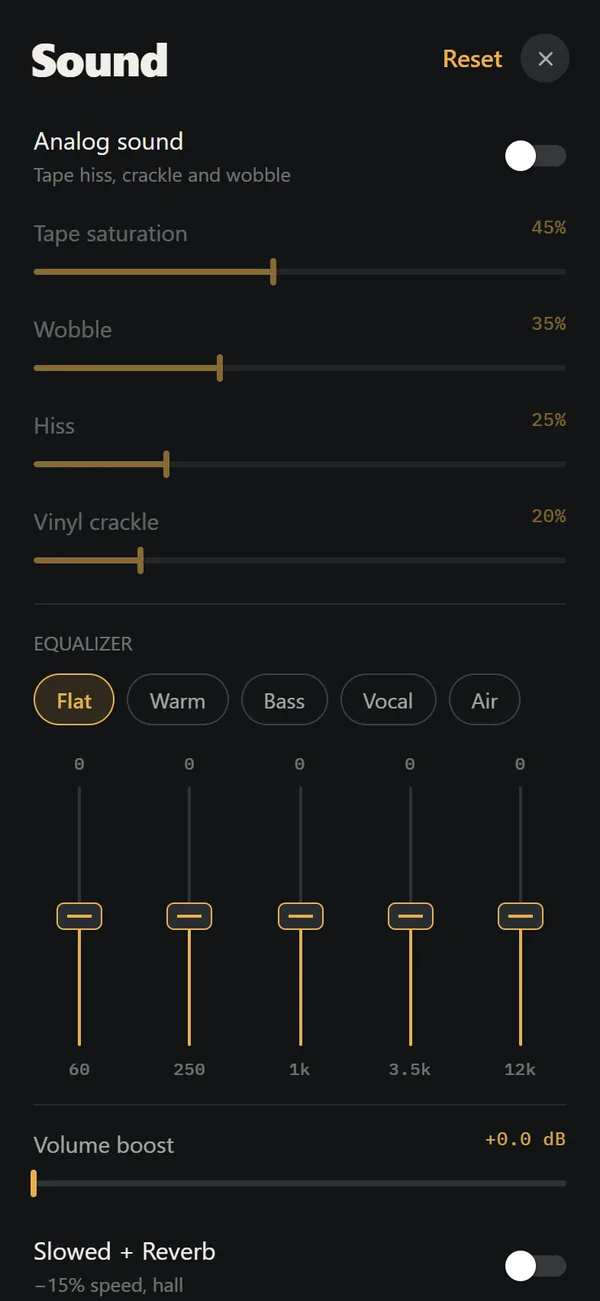 Analog Sound on iPhoneFour sliders (saturation, wobble, hiss, crackle), automatic machine sound and a lo-fi radio filter, live on your own files. Free.
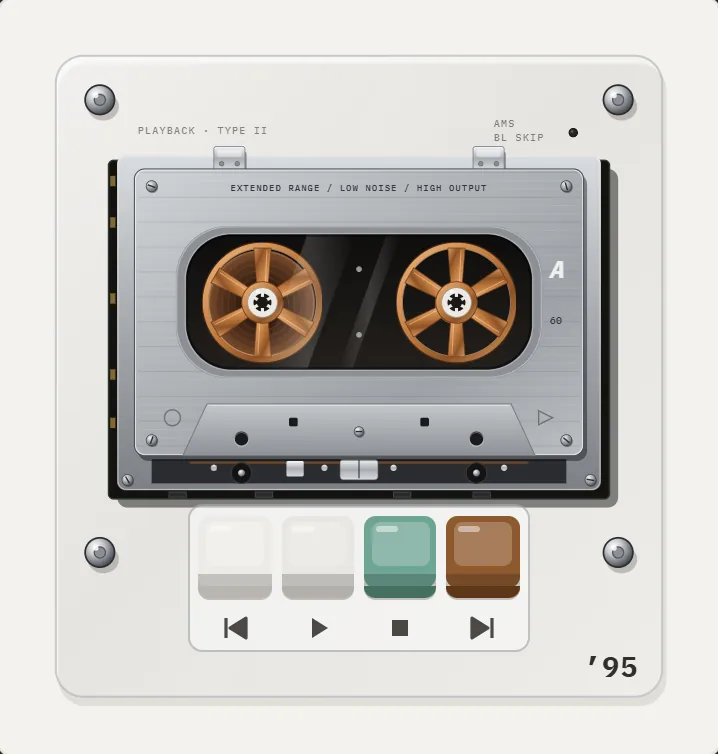 Cassette players10 pocket cassette machines with turning reels, swipe-to-wind and tape stop.
 What Is Tape Saturation? The Sound of Magnetic TapeThe physics of tape saturation, why bias exists, what harmonics it adds, and how to set a tasteful amount.
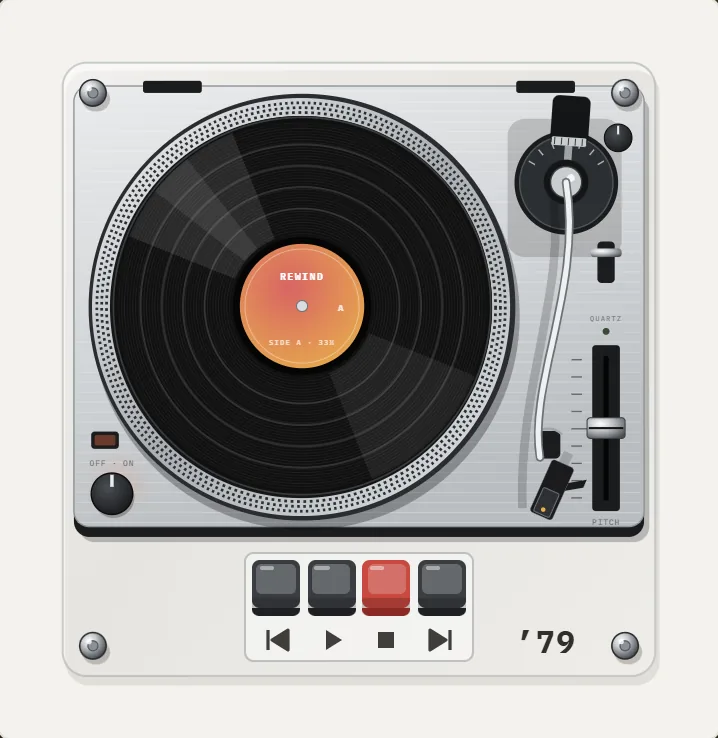 Belt-Drive vs Direct-Drive TurntablesBelt or direct drive? How each turntable drive works, where each wins, and why DJs settled on the Technics SL-1200.
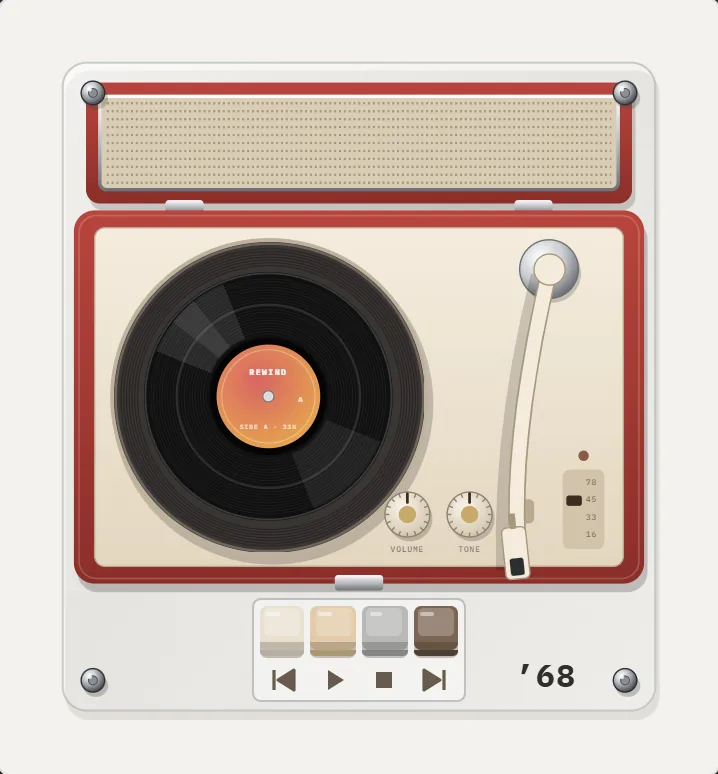 Why Vinyl CracklesThe physical reasons vinyl crackles, how a stylus reads a groove, and how to add or avoid the sound.