REWIND
What is lo-fi music?
Lo-fi, short for low fidelity, is music that keeps its imperfections on purpose: tape hiss, wobbling pitch, vinyl crackle, soft distortion and room noise. The word started with home recordings and later gave its name to a calm, beat-driven style called lo-fi hip hop, popularized on YouTube in the 2010s.
Download free on iPhoneSee all 30 machines
8 machines free forever · no account · works offline
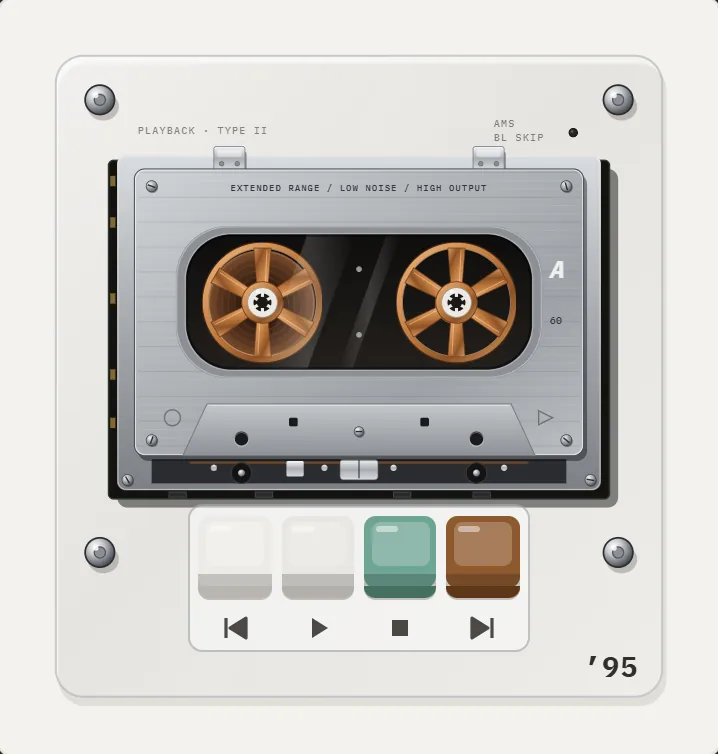
Spin the reels with your finger · press ▶ ■
What does lo-fi mean in music?
Hi-fi means a recording that tries to be a clean, faithful copy of the performance. Lo-fi turns that ambition around. Flaws that engineers normally remove stay in because they give the music personality. The Wikipedia article on lo-fi music defines it as music in which elements usually regarded as imperfections are present, sometimes as a deliberate style choice.
The word is used in two ways. One is a recording quality: a song made on cheap gear. The other is a genre label: lo-fi hip hop, lo-fi house, "lofi beats".
Where does lo-fi come from?
The same article says WFMU disc jockey William Berger is usually credited with popularizing the term through his radio show Low-Fi, which ran from 1986 to 1987 and was built on home recordings made with inexpensive equipment. The term itself goes back at least to the 1950s, and lo-fi began to be recognized as a style in the 1990s, when it became tied to do-it-yourself music.
Lo-fi hip hop is newer. The Wikipedia article on lofi hip-hop dates its origins from the early 2000s to the late 2010s and says YouTube popularized it in the 2010s. Japanese producer Nujabes is often called its godfather.
What does lo-fi sound like?
| Sound | What it is | Where it comes from |
|---|---|---|
| Tape hiss | A soft, steady noise like air | The magnetic particles on a cassette; see tape saturation |
| Wobble | Slow pitch drift | Uneven tape or turntable speed, called wow and flutter |
| Vinyl crackle | Pops and ticks | Dust and wear in a record groove, see why vinyl crackles |
| Saturation | Soft, warm distortion | Overdriven tape or electronics |
| Muffled highs | Less treble | Cheap microphones, old tape, low-pass filtering |
| Dusty drums and mellow chords | Jazz samples, loose timing | The beatmaking style |
Why do people like lo-fi?
It sounds human. A clean digital track can feel sterile, and lo-fi adds texture that reminds people of cassettes, radios and bedroom studios. It is also quiet, steady and usually free of sharp transients, so it works as a background for reading, working or falling asleep. Taste is the safe explanation, and our piece on why old music sounds warm goes into the sound itself.
How can you make any song sound lo-fi?
Producers do this in audio editors. On iPhone you can do it live while listening, in an app such as REWIND, using its analog sound sliders: tape saturation, wobble, hiss and vinyl crackle, plus a five-band equalizer.
- Pick a song you own as a file.
- Add a little tape saturation to soften the peaks.
- Add slow wobble, the pitch drift of an old tape or turntable.
- Add a quiet layer of hiss or crackle.
- Cut some treble and boost the low mids with an equalizer.
- Keep the effect light. If you notice it every second, it is too much.
Is lo-fi the same as vaporwave or slowed and reverb?
No, though they overlap. Vaporwave is a separate genre built on slowed, chopped samples of older pop and lounge music. Slowed and reverb is an effect applied to existing songs, described in what is slowed and reverb music. Lo-fi is a quality, and also a calm beat style. A track can be several of these at once.
What are the main types of lo-fi?
| Type | What it sounds like | Typical use |
|---|---|---|
| Lo-fi hip hop and chill beats | Slow drums, jazz chords, vinyl crackle | Study and background playlists |
| Bedroom pop and indie lo-fi | Home-recorded vocals and guitars with hiss | Listening for the songs |
| Lo-fi house | House rhythms with muffled, dusty sound | Dancing |
| Ambient lo-fi | Tape drift and soft textures with no beat | Sleep and relaxation |
| Lo-fi as a filter | Any song with hiss, wobble and dull treble added | Mood, nostalgia |
Why does lo-fi often sound like cassette tape?
Because tape is where much of the vocabulary came from. A cassette recorder at home gave a generation of musicians a cheap studio, and its flaws became the sound. Tape compresses peaks softly, rolls off the highs, adds hiss and drifts slightly in speed. Each of these is a lo-fi marker. Vinyl contributes crackle and low rumble. Cheap digital gear adds aliasing and a steely edge.
Understanding those parts helps you adjust them. Tape saturation is the soft compression, wow and flutter is the drift, and vinyl crackle comes from dust and wear. In an app you can set each one separately.
How can you listen to lo-fi on iPhone?
Three routes are common. Streaming and radio apps play ready-made lo-fi beats. Your own library works too: albums of instrumental hip hop, ambient records and old home recordings. And you can add the lo-fi sound to music you already have, which is the idea behind REWIND's analog sound controls: saturation, wobble, hiss and vinyl crackle, applied live on an offline player. Its free Lo-fi radio switch narrows the sound like an old receiver. Streaming is easy, a library is personal and an effect gives any song a new color.
If you want to try the effect route, lo-fi music player app for iPhone explains the settings in steps.
Is lo-fi less "good" than hi-fi?
They solve different problems. Hi-fi aims for accuracy, and lo-fi aims for feeling. A pristine recording can be cold, and a noisy one can be intimate. Neither is better. Producers often choose lo-fi on purpose because the limits make decisions easier: with a four-track recorder and one microphone, you finish the song. Listeners choose by mood.
Lo-fi in one sentence: music that keeps its noise, wobble and warmth on purpose.
Frequently asked questions
What is lo-fi music?
Lo-fi, or low fidelity, is music with deliberately kept imperfections such as tape hiss, vinyl crackle and wobble. It is also a label for the calm lo-fi hip hop style.
What does lo-fi stand for?
It stands for low fidelity, the opposite of hi-fi.
Is lo-fi a genre?
Both. It describes a recording quality, and it is also used as a genre name, especially for lo-fi hip hop and chill beats.
Who started lo-fi music?
The term was popularized by DJ William Berger's radio show, which ran from 1986 to 1987. Lo-fi hip hop was popularized on YouTube in the 2010s, with Nujabes often cited as an influence.
How can I make my music sound lo-fi on iPhone?
Use an app with tape and vinyl effects and an equalizer. REWIND has saturation, wobble, hiss and crackle sliders that run live on your own files.
Keep exploring
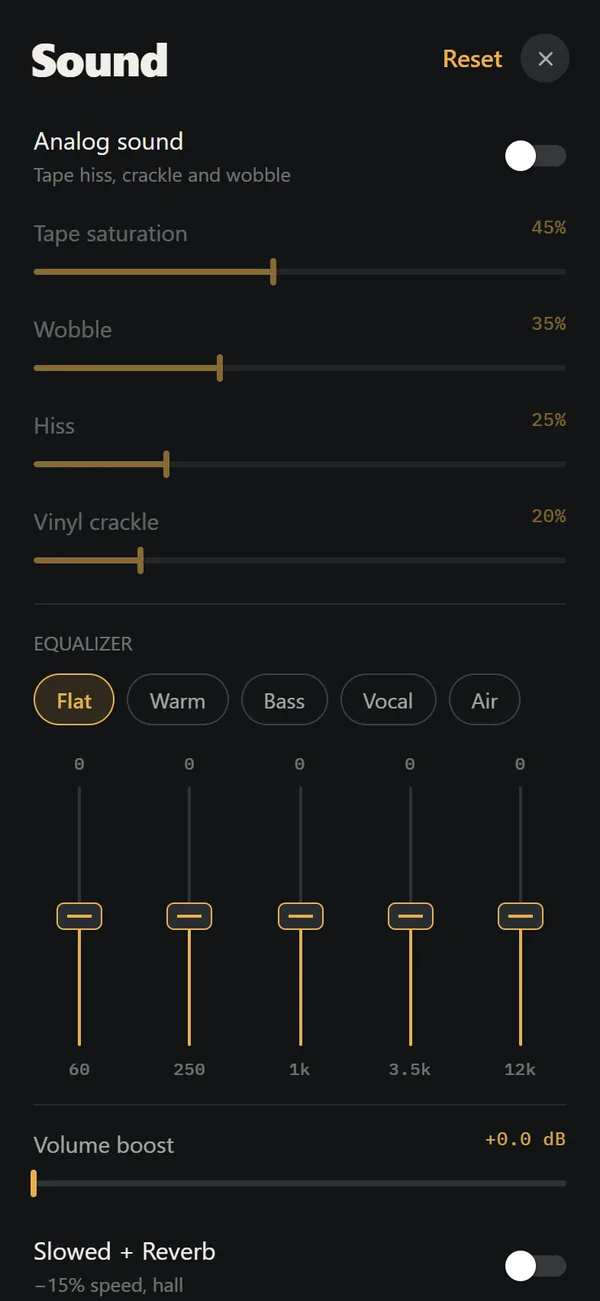 Analog Sound on iPhoneFour sliders (saturation, wobble, hiss, crackle), automatic machine sound and a lo-fi radio filter, live on your own files. Free.
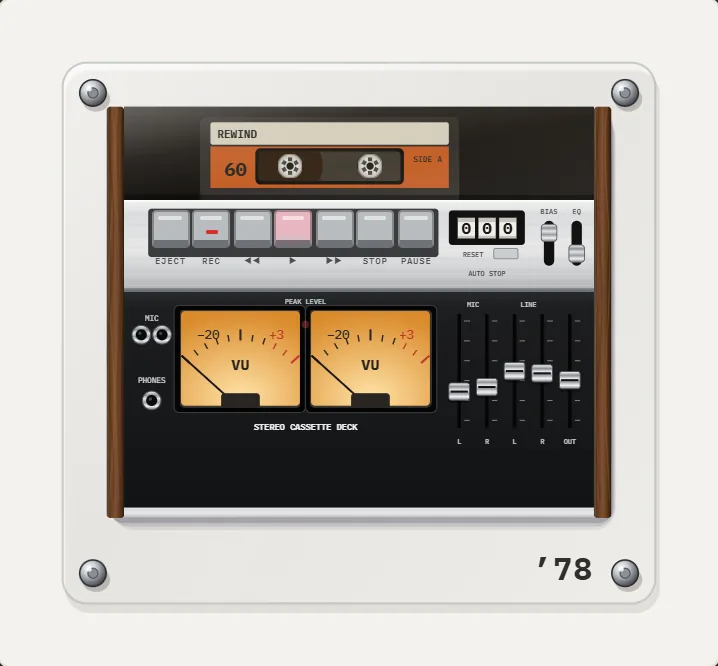 What Is Tape Saturation? The Sound of Magnetic TapeThe physics of tape saturation, why bias exists, what harmonics it adds, and how to set a tasteful amount.
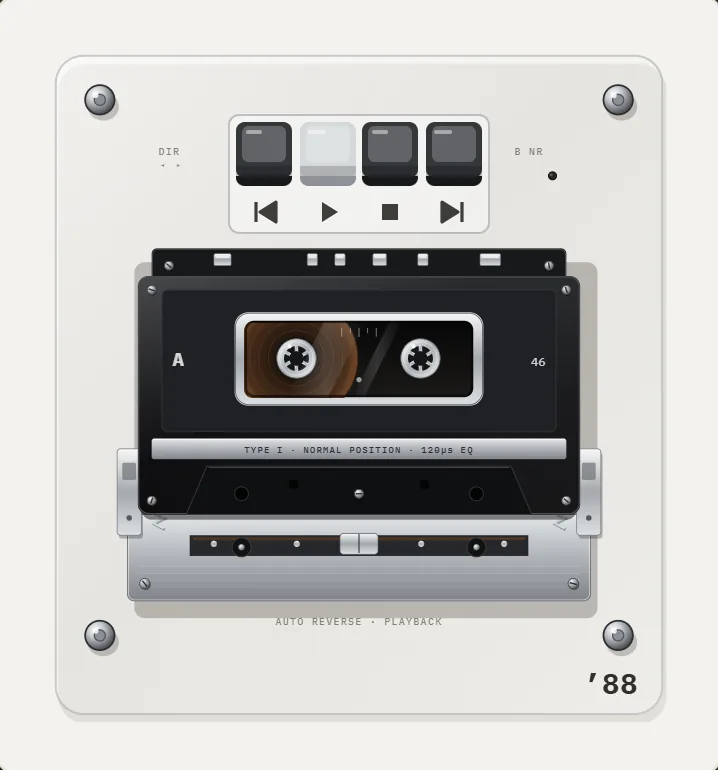 What Is Wow and Flutter? Tape and Vinyl Pitch DriftWhat causes wow and flutter, how it is measured in percent, and how to add a gentle amount back to digital music.
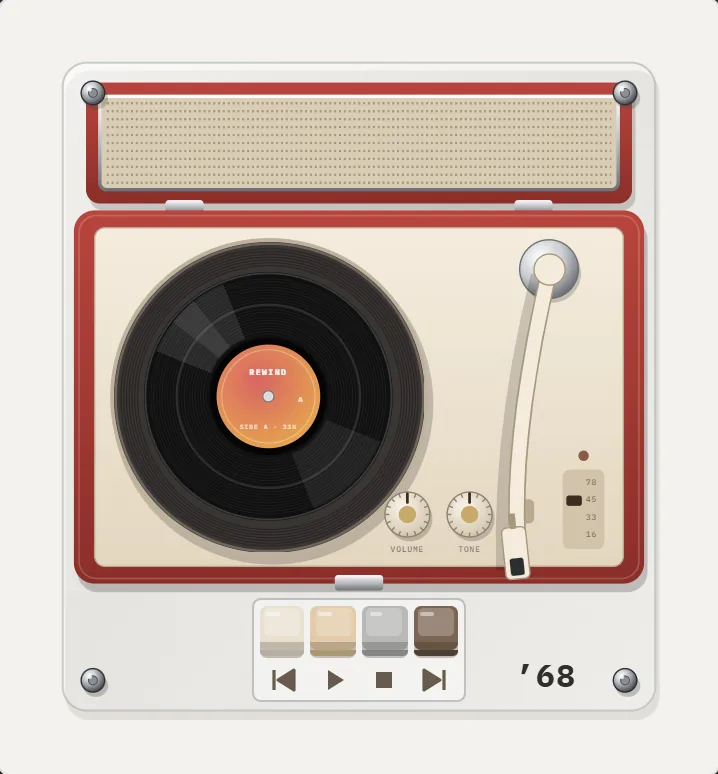 Why Vinyl CracklesThe physical reasons vinyl crackles, how a stylus reads a groove, and how to add or avoid the sound.
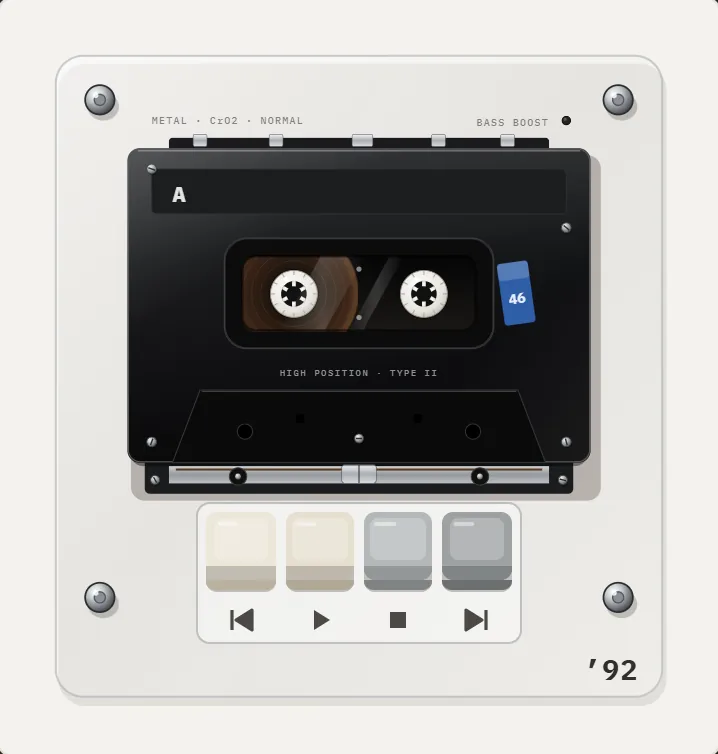 Why Old Music Sounds WarmTape saturation, vinyl limits, tube harmonics and the ear itself: the causes of warm sound, and how much of it is taste.
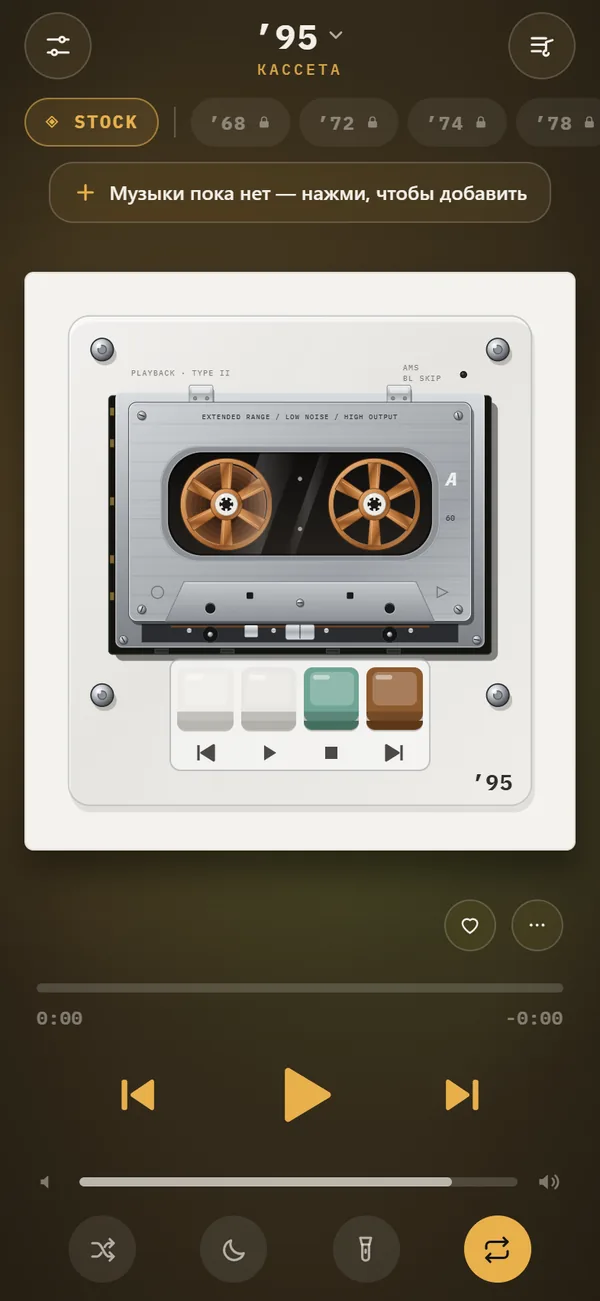 Lo-Fi Music Player App for iPhoneLo-fi radio apps versus a player that adds tape and vinyl sound to your own files on iPhone, with honest limits.