REWIND
Old music players: names, types and what they were called
Old music players are called phonographs, gramophones, record players or turntables for discs; reel-to-reel, 8-track and cassette players for tape; Walkmans or personal stereos for pocket cassettes; and Discmans, MiniDisc and MP3 players for digital. The oldest, Edison's phonograph, dates from 1877.
Download free on iPhoneSee all 30 machines
8 machines free forever · no account · works offline
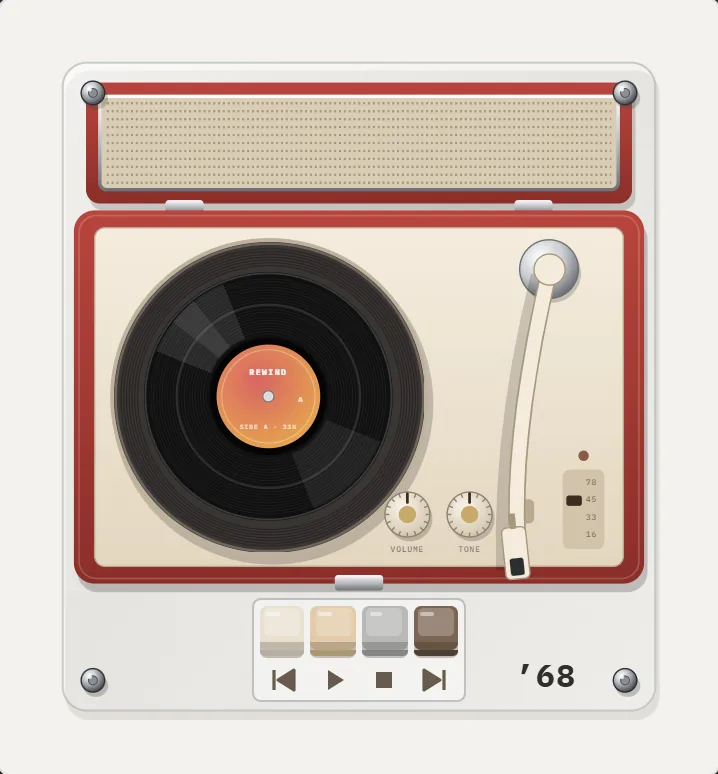
What is a vintage music player called?
There is no single name, because the answer depends on the era and the medium. People searching for the name of an old music player usually mean one of these: phonograph, gramophone, record player, turntable, jukebox, reel-to-reel, tape recorder, cassette player, Walkman, boombox, Discman, MiniDisc player or MP3 player.
Thomas Edison invented the phonograph in 1877, and the word first applied to his machines (Wikipedia: Phonograph). Gramophone was Emile Berliner's name for his flat-disc player, and in British English it stayed the usual word for a record player. In everyday American speech, "phonograph" and later "record player" took over.
What is the timeline of old music players?
Each format was a response to the previous one's weaknesses: size, quality, capacity or portability. Dates are for first commercial availability in most cases.
| Era | Player | What it played | Notes |
|---|---|---|---|
| 1877 | Phonograph | Wax or foil cylinders | Invented by Edison |
| 1890s | Gramophone | Flat discs | Berliner's non-recordable disc system |
| 1890s to 1950s | 78 rpm record player | Shellac discs at about 78 rpm | Speed standardized in the late 1920s |
| 1948 to 1949 | LP and 45 player | Vinyl at 33⅓ and 45 rpm | Columbia LP 1948, RCA Victor 45 in 1949 |
| 1930s on | Reel-to-reel | Open-reel tape | Home use grew after the 1940s |
| 1963 | Cassette player | Compact Cassette | Philips, August 1963 |
| 1965 | 8-track player | Cartridge tape | Popular in cars |
| 1979 | Walkman-style personal stereo | Cassette | Sony TPS-L2, July 1, 1979 |
| 1970s | Boombox | Cassette and radio | Big portable speakers |
| 1982 to 1984 | CD player, portable CD player | Compact disc | CD in Japan 1982, Discman D-50 in 1984 |
| 1992 | MiniDisc player | Small magneto-optical disc | Sony, 1992 |
| 1998 | MP3 player | Files in flash memory | Rio PMP300 shipped in 1998 |
| 2001 | iPod | Files on a hard drive | Unveiled October 23, 2001 |
What were the disc players called?
Early disc players were wind-up gramophones with a horn. Electric record players with an amplifier and loudspeaker followed in the 1920s and 1930s. The word turntable describes just the rotating platter and tonearm, to which an amplifier and speakers are added. A hi-fi system built from separate parts is a component system, and a console with everything in one cabinet is a radiogram. A jukebox is a coin-operated record player.
A 1968 suitcase-style portable and a 1979 direct-drive turntable show how far the shape went, and how a record player works explains the parts.
What were the tape players called?
Tape comes in three main families. Open-reel machines, called reel-to-reel or tape recorders, were first used by broadcasters and later by home enthusiasts. The 8-track cartridge, created in 1965, was easy to load in a car. The Compact Cassette was introduced by Philips in August 1963 (Wikipedia: Cassette tape).
Cassette machines had many names: tape recorder, cassette recorder, cassette deck for hi-fi units, boombox or ghetto blaster for big portables, and personal stereo or Walkman for pocket players. Walkman was a Sony brand that became a generic word, and the Oxford English Dictionary added it in 1986.
What were the digital portable players called?
- Discman or portable CD player: introduced in 1984 as the Sony D-50, and later sold as CD Walkman.
- MiniDisc player: announced by Sony in September 1992, with compressed audio on a small disc.
- MP3 player or digital audio player: stores compressed files in flash memory. The Rio PMP300, introduced in September 1998, shipped with 32 MB.
- iPod: unveiled on October 23, 2001, with a 5 GB hard drive and the line "1,000 songs in your pocket."
- Smartphone: largely replaced all of the above by 2010.
What do the crossword and trivia answers usually turn out to be?
If you saw this as a clue, the likely answers are RECORD PLAYER, PHONOGRAPH, GRAMOPHONE, TURNTABLE, JUKEBOX, WALKMAN, DISCMAN, BOOMBOX, 8 TRACK, TAPE DECK and IPOD. The clue words help: a wind-up player with a horn points to gramophone, a pocket tape player to Walkman, and a coin-operated one to jukebox.
A fun fact: the wind-up gramophone, with its horn and crank, ran on a spring motor, and a governor regulated the speed. Edison's cylinders and Berliner's discs were rivals before discs won.
What were the main portable players of each decade?
- 1950s: transistor radios.
- 1960s: portable record players and the first cassette recorders.
- 1970s: boomboxes, the cassette Walkman at the end of the decade.
- 1980s: personal stereos, then the portable CD player from 1984.
- 1990s: MiniDisc, then the first MP3 players.
- 2000s: the iPod and other hard-drive and flash players.
How can I see these machines without hunting for them?
REWIND collects a lot of these shapes in one app: 30 machines from 1968–2005 that play your own music files, including 10 pocket cassette players, 11 portable CD players, 3 turntables, 2 early MP3 players, a reel-to-reel, a cassette deck and boomboxes. The machines are named by year and type, with no brand names.
Frequently asked questions
What is the old music player called?
It depends on the era: phonograph or gramophone for early records, record player for later discs, cassette player or Walkman for tape, Discman for portable CD, and MP3 player for the early digital ones.
What is the difference between a phonograph and a gramophone?
A phonograph, invented by Edison in 1877, played and recorded on cylinders. A gramophone, developed by Berliner, played flat discs. In later speech, both words came to mean any record player.
What came before the cassette player?
Reel-to-reel tape recorders, 78 rpm and LP record players, and radios. The 8-track cartridge arrived at about the same time as the cassette, in the mid-1960s.
What was the first portable music player?
Portable gramophones and then transistor radios came first. The cassette Walkman of 1979 was the first low-cost personal stereo.
What came after the Walkman?
Portable CD players in 1984, MiniDisc players in 1992, MP3 players in 1998 and the iPod in 2001.
Keep exploring
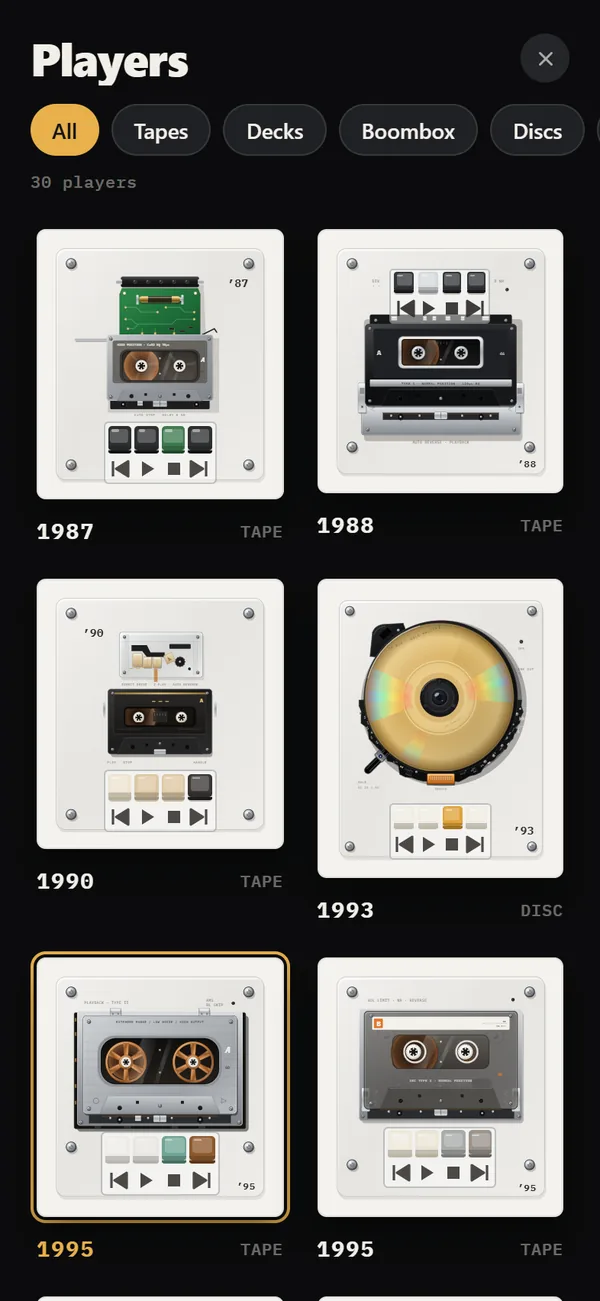 Retro Music Players for iPhone30 retro machines from 1968–2005, grouped by type.
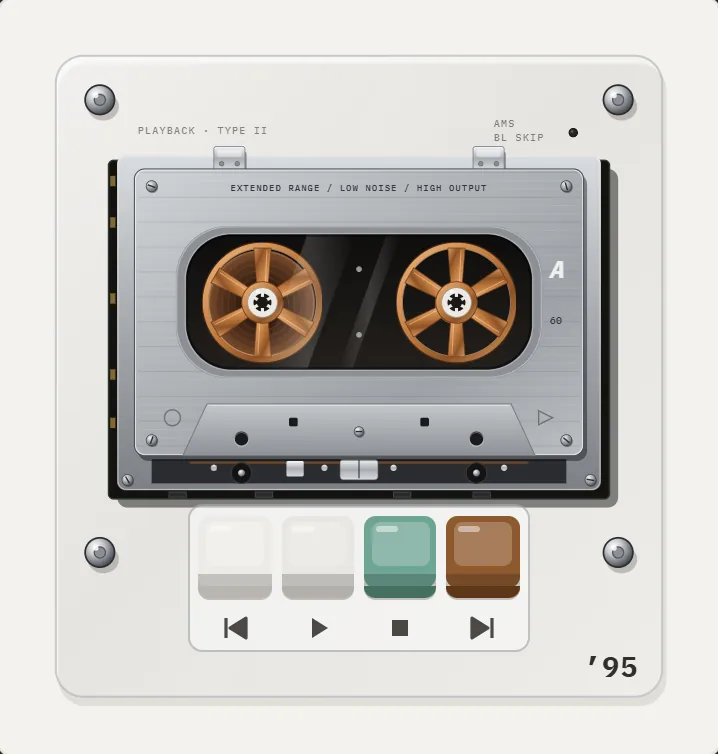 History of the Compact CassetteFrom a pocket-sized dictation tape in 1963 to the Walkman era and the modern revival: the dated history of the Compact Cassette.
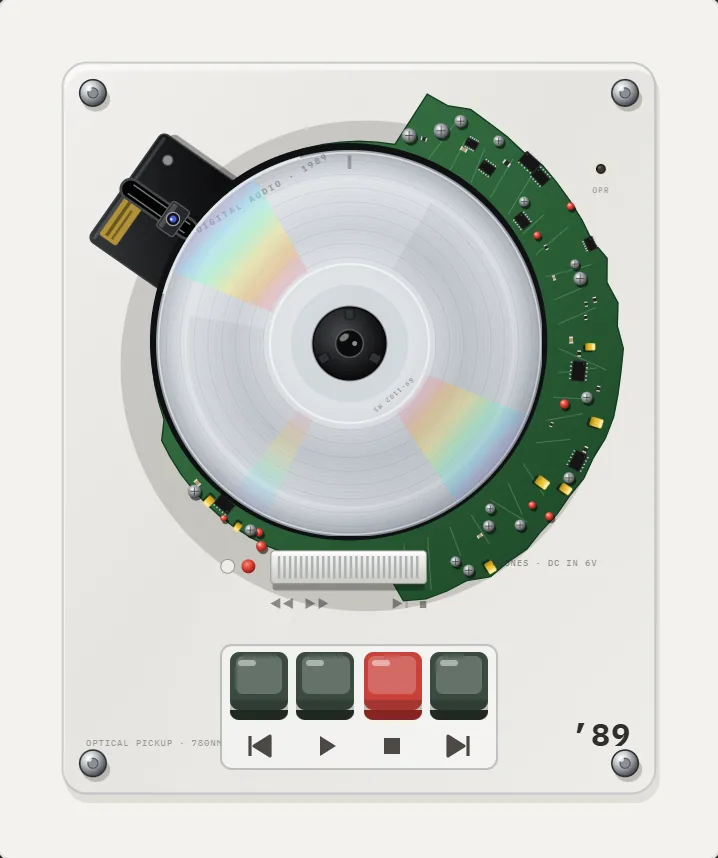 History of the Portable CD PlayerThe Sony D-50 in 1984, rubber shock absorbers, anti-skip memory and the MP3 CD era: a dated history of the pocket CD player.
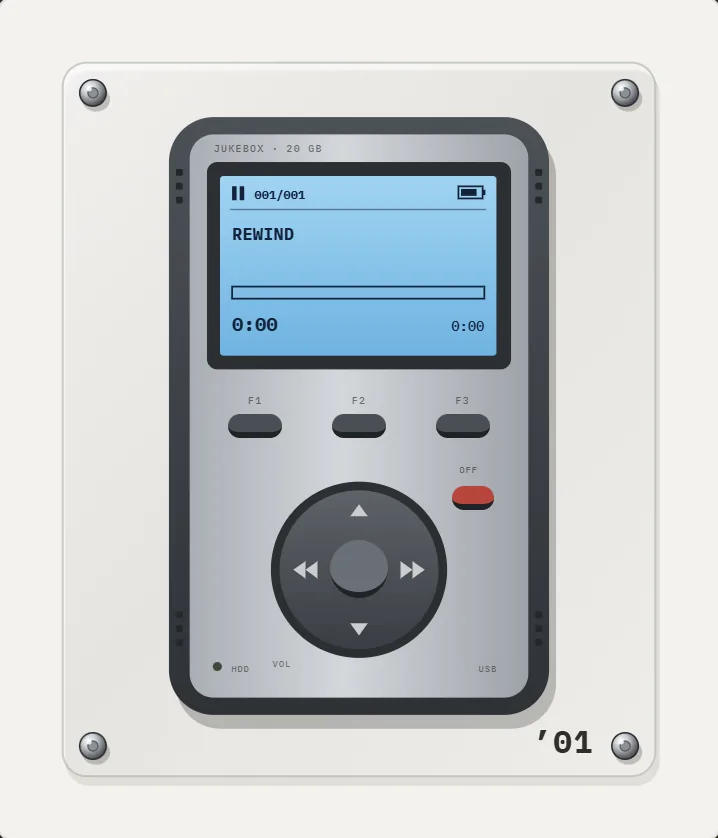 History of the MP3 PlayerFrom the MPMan F10 and Rio PMP300 in 1998 to the 2001 iPod and the smartphone: a dated history of the MP3 player.
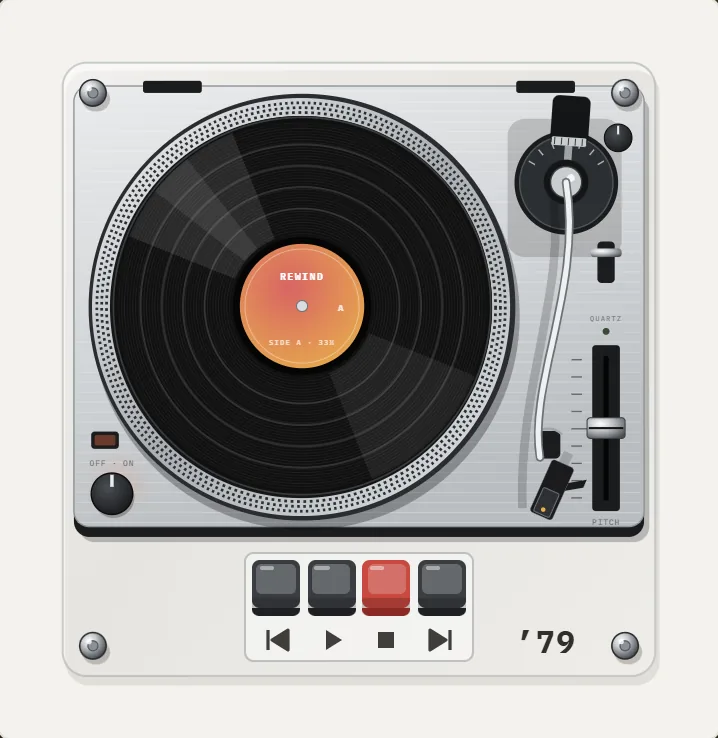 How Does a Record Player Work? Groove to SpeakerPlatter, stylus, cartridge, preamp: the path from a wavy groove to sound, and how to play a record in six steps.
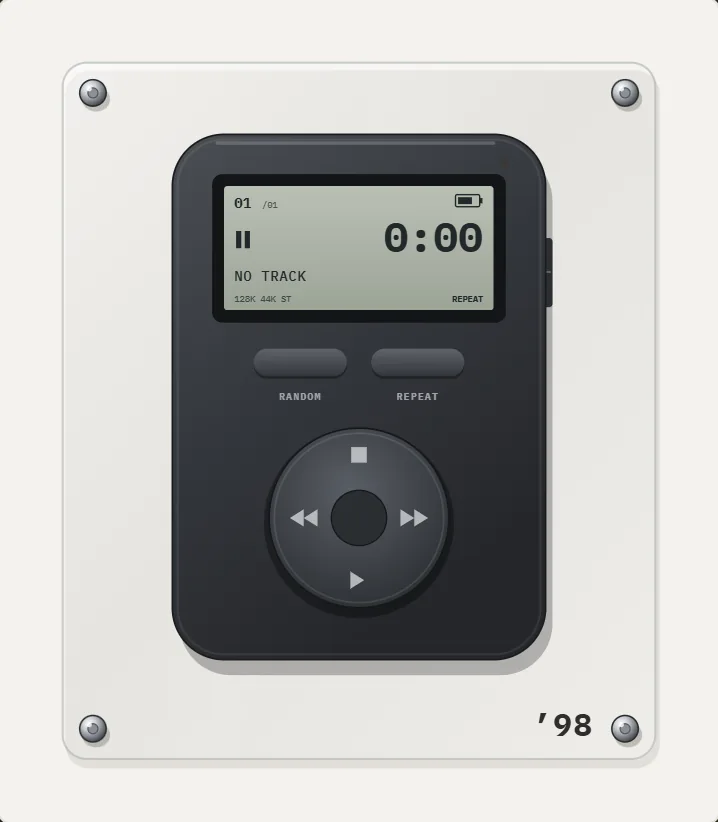 Walkman vs MP3 PlayerTape against flash memory: storage, sound, battery, speed of finding songs and what each is good at, with 1979 and 1998 dates.