REWIND
Can you still buy a Discman, Walkman or CD player?
Yes, but mostly used. Sony ended the original cassette Walkman in Japan in 2010 and the Discman line in the early 2010s, though the Walkman name now sits on digital players. New cassette and portable CD players still appear from smaller makers. Used units are cheap, and condition matters.
Download free on iPhoneSee all 30 machines
8 machines free forever · no account · works offline
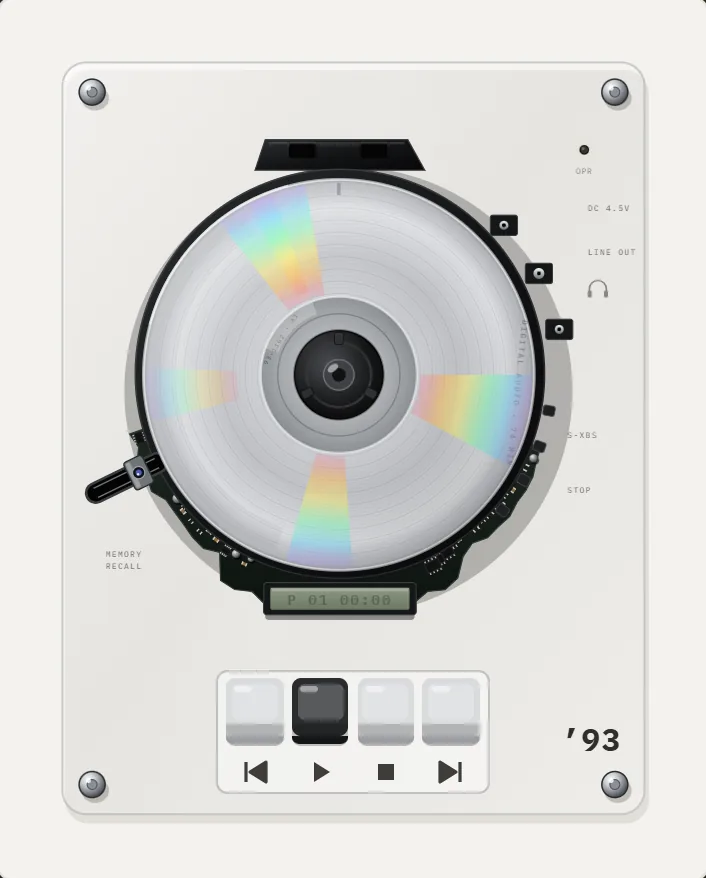
Is the Walkman still made?
Sony launched the Walkman TPS-L2 in Japan on 1 July 1979, and the name stuck for decades. Cassette models were discontinued in Japan in 2010, and the last cassette model sold in the United States, the WM-FX290W, first appeared in 2004 (Wikipedia: Walkman). Since 2011 the Walkman brand has referred only to digital flash memory players.
So a new Walkman today is a digital audio player, usually a compact one with a touchscreen, and it plays files, not tapes. The cassette versions are secondhand.
Is the Discman still made?
The first Discman, the D-50 (also D-5), launched in 1984. The name later became CD Walkman, first for the Japan lineups between October 1997 and March 1998 and entirely in 2000, and the players were discontinued at the start of the 2010s (Wikipedia: Discman). Sony no longer makes them.
New portable CD players are still sold, mostly compact units from lesser-known brands, some with Bluetooth. Build quality varies widely, so check recent reviews and the return policy.
What can I buy today, and from where?
| Device | New in 2026? | Typical source | Watch out for |
|---|---|---|---|
| Cassette Walkman or similar pocket player | Rare, from small makers | Used: flea markets, auction sites, thrift shops | Perished belts, dirty heads |
| Portable CD player (Discman style) | Yes, from smaller brands | New online, or used | Weak anti-skip, plastic lids |
| Cassette deck or boombox | A few new models | Used from sellers who test | Chewing tape, belts |
| iPod Classic | No, discontinued in 2014 | Used only | Aging hard drives, batteries |
| Digital Walkman | Yes | Electronics shops | Not a retro device |
What should I check before buying a used one?
- Ask for a short video of the player working with a disc or tape, including the buttons and the headphone jack.
- For cassettes, look for a clean pinch roller, a steady speed and no squeal. Pitch wobble is a sign of old belts, as in what is wow and flutter.
- For CDs, ask whether it plays burned CD-Rs, which older lasers often reject. If it skips, see CD player won't play CDs.
- Check the battery compartment for corrosion, a common killer.
- Look at the headphone jack: crackle when you wiggle the plug means a worn jack.
- Confirm that charger and any remote are included, since some have odd plugs.
A tested unit from a seller who describes the belt and the lens is worth a few extra dollars. Untested often means broken.
Is it better to buy the hardware or use an app?
Hardware gives you the real mechanism, the physical media, the clicks and a device that cannot receive notifications. It also needs batteries, tapes or discs that you must still own, and occasional repair. A phone gives you your own music in your pocket and no maintenance, but not the object.
A middle route is to use hardware for the ritual and the phone for convenience. REWIND plays your own audio files on drawn machines, such as a pocket cassette player or a portable CD player, from 1968–2005. It cannot play physical discs or tapes.
How much should I expect to pay?
Prices follow the nostalgia market, so no figure here would stay true. As a rule, common working players cost far less than collectible ones, and a unit with a box, manual and a tested guarantee costs more than a bare one.
Be careful with listings marked untested, for parts, or as is. They are often broken. Look for photos of the battery compartment, the display on, and a clear return policy. A fair price covers a belt replacement and a clean.
For daily use, buy the sturdier player, not the rarest. A common model with a clean mechanism is easier to repair than a collectible with a weak belt. Ask the seller when the belt was last changed.
What accessories do I need to use one today?
- Batteries or a power adapter with the right voltage and polarity.
- Headphones with a 3.5 mm plug, or an adapter if your headphones are wireless.
- A few tapes or discs you actually own. Blank tapes are still sold.
- Isopropyl alcohol and cotton swabs for the heads or the lens.
- A case or pouch: these machines scratch easily.
What about the Walkman versus a modern MP3 player?
A cassette Walkman is a tape player. A flash MP3 player stores compressed files on a chip. The two differ in everything from storage to sound, and the whole comparison is in Walkman vs MP3 player. If the iPod is your target, see is the iPod Classic still supported.
Frequently asked questions
Does Sony still make the cassette Walkman?
Not as a current product. Sony discontinued cassette Walkmans in Japan in 2010, the last cassette model sold in the US launched in 2004, and since 2011 the Walkman name covers only digital players.
Can I still buy a Discman?
Not new from Sony. Used Discman players are widely sold, and some brands still make new portable CD players.
Are old cassette Walkmans worth buying?
They can be, if tested. Belts and rubber rollers age, so a player that works today may need maintenance. Buy from a seller who shows it running.
Do they still make portable cassette players?
A few smaller companies do, and some are sold as modern retro products. Quality varies, so check recent reviews.
What is the cheapest way to get the old feel?
Play your own files in a retro player app. REWIND does this on iPhone, with 30 machines from 1968–2005, though it plays files and not tapes or discs.
Keep exploring
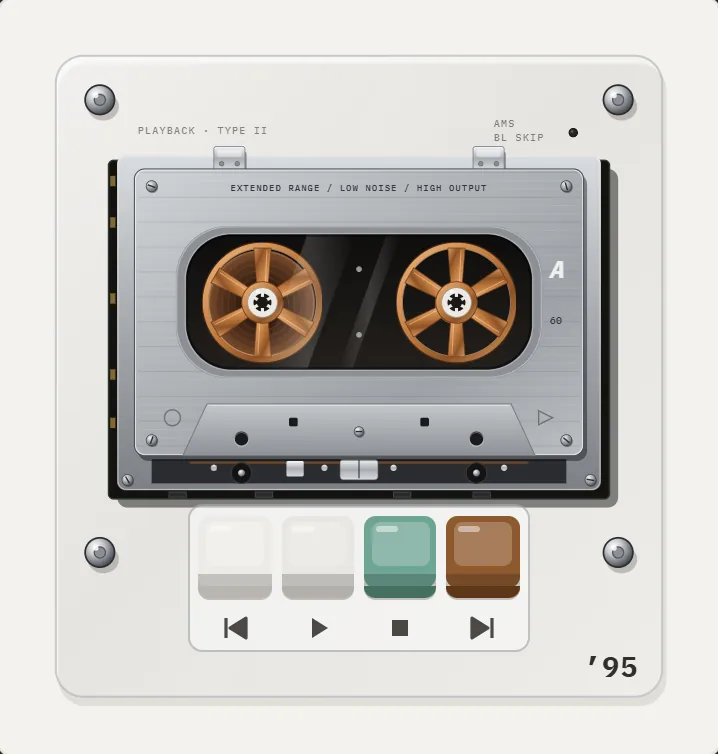 Cassette players10 pocket cassette machines with turning reels, swipe-to-wind and tape stop.
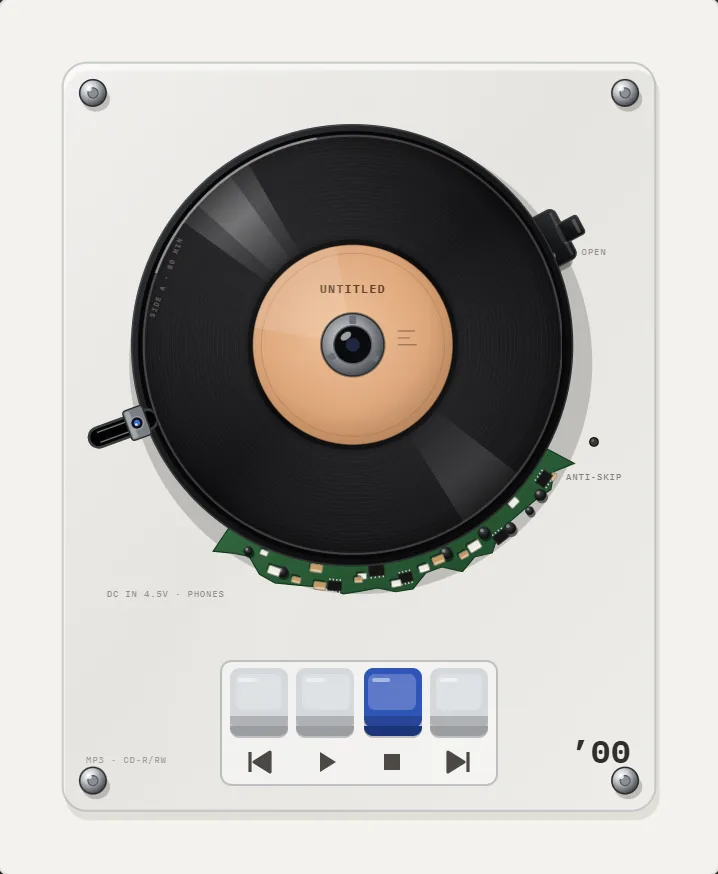 CD players11 opened portable CD players from 1989 to 2005 with scratching.History of the Compact CassetteFrom a pocket-sized dictation tape in 1963 to the Walkman era and the modern revival: the dated history of the Compact Cassette.
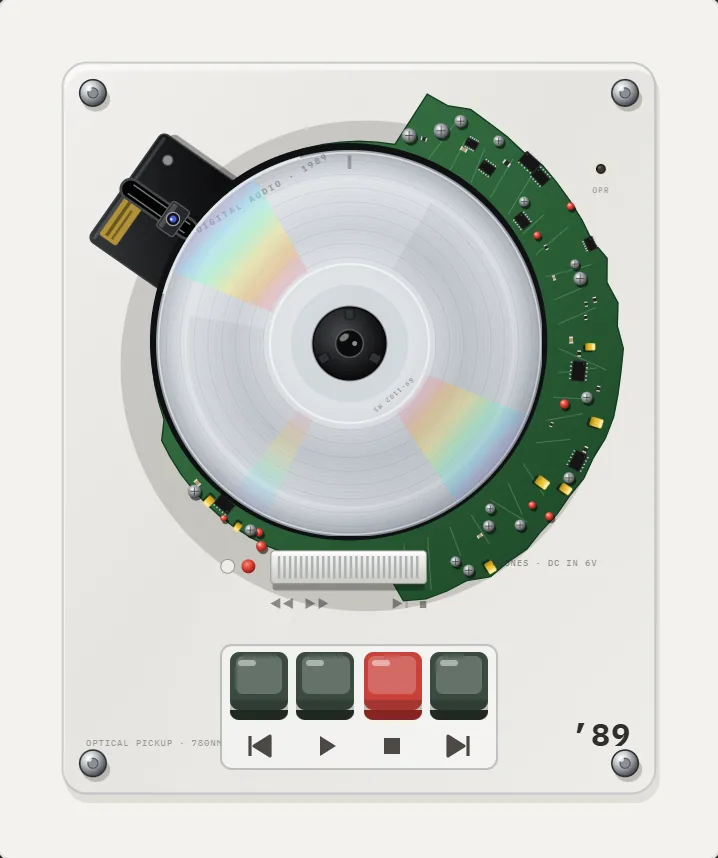 History of the Portable CD PlayerThe Sony D-50 in 1984, rubber shock absorbers, anti-skip memory and the MP3 CD era: a dated history of the pocket CD player.
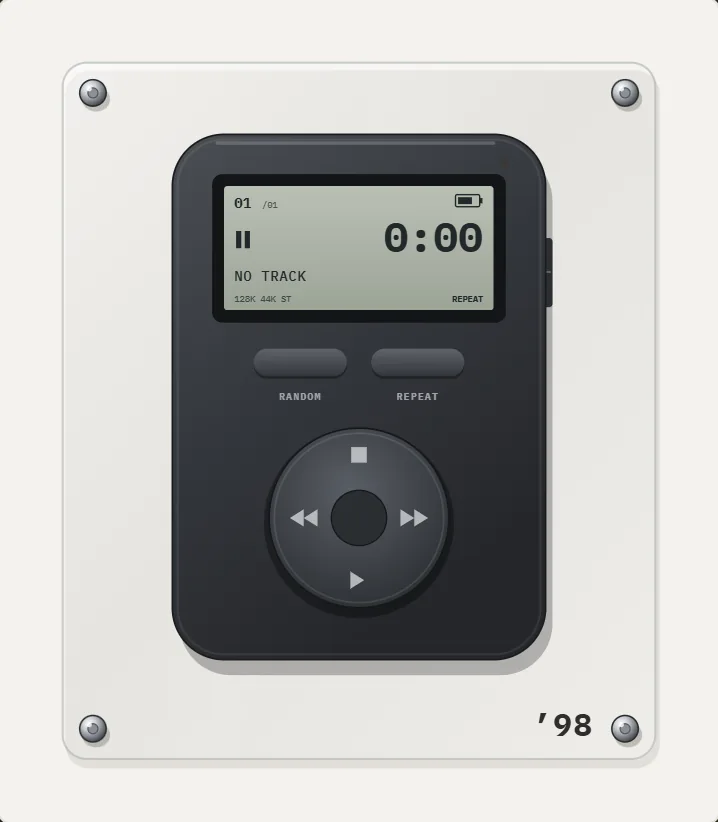 Walkman vs MP3 PlayerTape against flash memory: storage, sound, battery, speed of finding songs and what each is good at, with 1979 and 1998 dates.
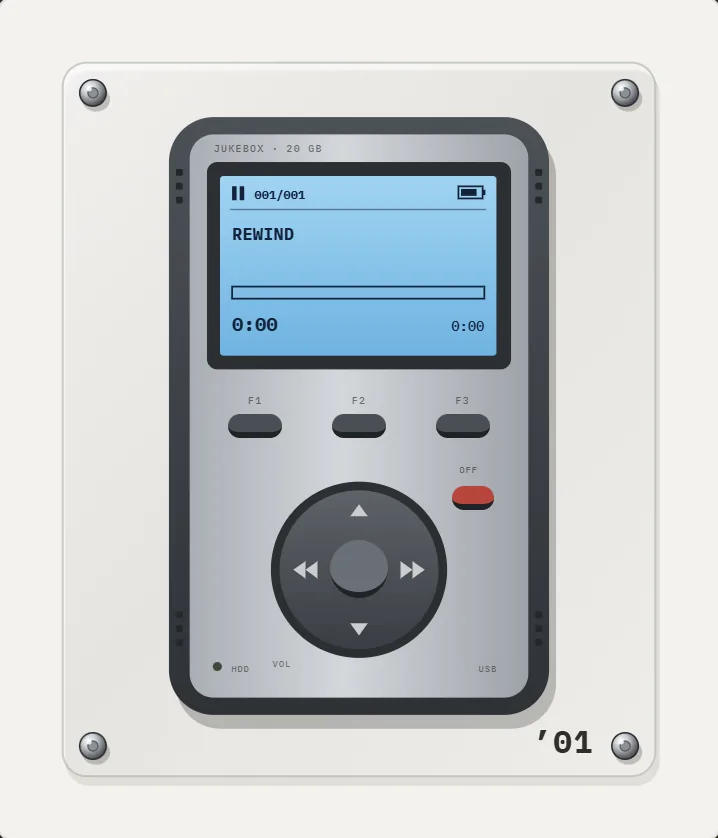 Is the iPod Classic Still Supported in 2026?Dates, what still works, Apple Music limits, supported formats, batteries and SSD mods for the iPod Classic, and phone alternatives.