REWIND
How to use a cassette player, step by step
To use a cassette player, open the door, insert the tape with the exposed tape edge toward the heads and side A facing you, close the door and press Play. Rewind and Fast-forward move the tape, Stop halts it, and Eject opens the door. Flip the cassette to hear side B.
Download free on iPhoneSee all 30 machines
8 machines free forever · no account · works offline
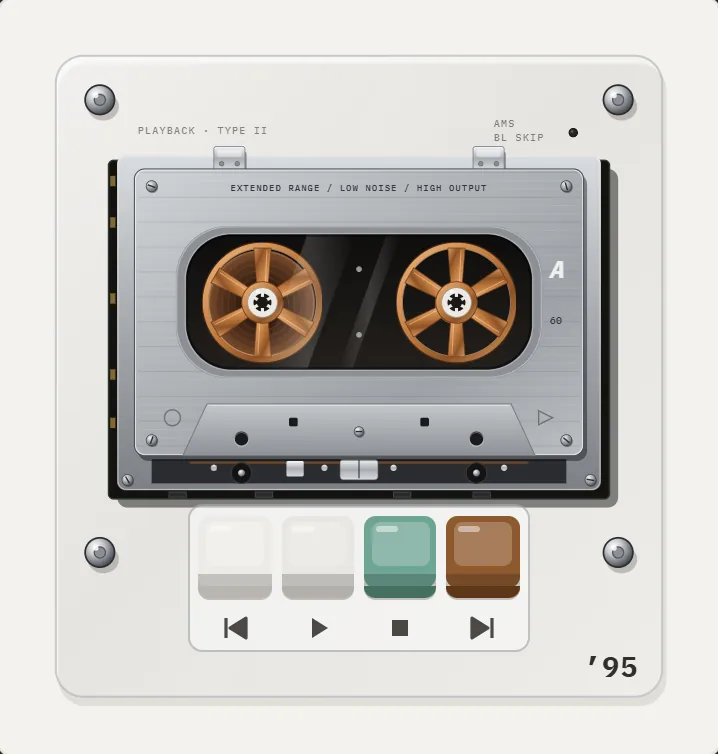
Spin the reels with your finger · press ▶ ■
How do I load and play a cassette?
The cassette has a flat spine, a window and two openings along the long edge where the tape is exposed. That edge is the front. It goes toward the heads inside the player.
- Press Stop/Eject to open the door.
- Take up any slack by turning a reel with a pencil if the tape looks loose.
- Insert the cassette with the exposed tape edge toward the mechanism and the side you want to hear (A or 1) facing up or toward you, depending on the player. Top-loading players have a drawing on the door.
- Close the door until it clicks.
- Press Play. The reels turn and sound starts after about a second. Adjust volume.
Side A is the side with the label showing that letter facing you. Flip the tape over to play side B.
What do the buttons mean?
Cassette controls inherited their symbols from earlier tape recorders and kept them for decades. A classic deck uses piano keys that press down and latch. Pocket players use smaller buttons with the same order.
| Button | Symbol | What it does |
|---|---|---|
| Play | right-pointing triangle | Moves tape at normal speed past the head so you hear it |
| Stop / Eject | square or ejected triangle | Stops the motor; a second press opens the door |
| Rewind | two left triangles | Spins tape back to the left reel quickly |
| Fast-forward | two right triangles | Spins tape forward quickly |
| Pause | two vertical bars | Holds the tape against the head without moving it |
| Record | circle, red | Records when pressed together with Play |
How do I rewind, fast-forward and find a song?
Press Rewind or Fast-forward and wait. A full side of a C60 cassette runs 30 minutes and a C90 side 45 minutes (Wikipedia: Compact Cassette), and winding a full side usually takes a minute or two. Press Stop when you think you are close, then Play to check.
To find the start of a song, look for the gap of silence. Some players have a music search button that skips to the next gap. Without it, you wind a little, press Play for a second, and repeat. A mechanical counter is the old way to note positions: write the number on the label so you can return to it.
How do I flip the tape and why does the tape not play on the other side?
Press Eject, take the cassette out, turn it over so that the other letter faces you, and put it back. Auto-reverse players do this inside: they switch the head or turn it, and the tape plays side B without you touching it.
If a side plays silence, check that you did not load the tape in with the wrong face, that the head is clean, and that the tape was not recorded on one side only. The cassette tape type also matters for recording, which is explained in normal, chrome and metal tapes.
What should I do if the tape is chewed or the player squeals?
Chewed tape happens when the pinch roller or capstan is dirty or worn, or when the tape was loose. Do not pull it hard. Eject, open the shell if you can, and wind it by hand back onto the reel with a pencil. Many tapes can be rescued by re-seating the tape and winding to remove creases.
A squeal comes from a dry pinch roller or stiff cassette pad. Wiping the roller and capstan with isopropyl alcohol on a cotton swab fixes dirt. Muffled treble usually means a dirty head, and the same swab clears it. Keep alcohol away from the rubber belt. Uneven pitch is covered in wow and flutter.
How should I look after tapes and the player?
- Store cassettes in cases, upright, away from heat, direct sun and speakers or magnets.
- Rewind them fully before storing so the tape sits evenly on the reels.
- Clean heads, capstan and pinch roller every 20 to 30 hours of use.
- Punch out the tabs on the back top corners if you want to prevent accidental recording. Tape over the gap to record again.
- Do not leave a tape in a hot car. The shell warps and the tape stretches.
What do Dolby, tape type and EQ switches mean?
Some players have switches beside the buttons. A Dolby B switch decodes noise reduction on tapes recorded with it. If the sound is dull and the tape was recorded with Dolby, switch it on. If the tape was not, leave it off, since decoding plain tape makes it sound muffled.
A tape type switch (Normal, Chrome, Metal, or 70 µs and 120 µs EQ) tells the player which playback curve to use. Many decks detect the cassette type from notches on the top edge of the shell. If a chrome tape sounds too bright on a switch set to Normal, flip the switch. The reasons are in normal, chrome and metal tapes.
How do I use a cassette player in REWIND?
REWIND does the same actions with gestures on the iPhone. On the pocket cassette machines, the reels turn while a song plays, you swipe the cassette to wind or fast-forward, and pausing makes the pitch slide down like a real tape stop. The tape mechanics page lists the gestures. It plays your own audio files and does not record.
Frequently asked questions
Which way does a cassette go in the player?
The exposed tape edge goes toward the heads, with the side you want to hear (A or B) facing the way the player's drawing shows. Most decks have a pictogram on the door.
How do I rewind a cassette without a rewind button?
Put a pencil in the hub hole of the take-up reel and turn it by hand. It is slow but works. Cassettes can also be wound in a spare player.
How long does one side of a cassette last?
A C60 plays 30 minutes per side, a C90 plays 45 minutes per side, and a C46 plays 23 minutes. The number is the total minutes for both sides.
How do I stop a cassette player from eating tape?
Clean the capstan and pinch roller with isopropyl alcohol, avoid very old or stretched tape, and take up slack in the tape with a pencil before playing.
Can I still use a cassette player today?
Yes. New and used players are sold, though quality varies. A used deck with a clean mechanism and fresh belts sounds best.
Keep exploring
Cassette players10 pocket cassette machines with turning reels, swipe-to-wind and tape stop. Cassette Tape TypesNormal, chrome and metal cassettes compared: coatings, bias, equalization, notches and what to use today.Tactile Retro ControlsSwipe to wind, finger to scratch, buttons that click, a real tape stop. Sounds are synthesized on device.
 What Is Wow and Flutter? Tape and Vinyl Pitch DriftWhat causes wow and flutter, how it is measured in percent, and how to add a gentle amount back to digital music.History of the Compact CassetteFrom a pocket-sized dictation tape in 1963 to the Walkman era and the modern revival: the dated history of the Compact Cassette.Cassette Adapter for iPhoneWhat a cassette adapter does, wired or Bluetooth, which iPhone adapter you also need, and how to fix a noisy one.