REWIND
Cassette tape types: normal, chrome and metal, and how to tell them apart
Cassettes come in IEC types: Type I normal (ferric oxide), Type II chrome (high bias), a rare Type III ferrichrome, and Type IV metal. They differ in magnetic coating, bias and equalization, so a deck set for the wrong type sounds dull or harsh. Notches on the shell let many decks detect the type automatically.
Download free on iPhoneSee all 30 machines
8 machines free forever · no account · works offline
What are the main cassette tape types?
The standard that defines them is IEC 60094. In everyday talk you will hear normal, chrome and metal. The table below combines facts from the Cassette tape article with the common deck settings of the period; the equalization time constants are the standard IEC values.
| Type | Common name | Coating | Playback EQ | Notches on the shell |
|---|---|---|---|---|
| I | Normal | Ferric oxide (gamma Fe2O3) | 120 microseconds | Write-protect tabs only |
| II | Chrome (high bias) | Chromium dioxide, or cobalt-modified iron oxide | 70 microseconds | One extra pair next to the tabs |
| III | Ferrichrome | Two-layer iron oxide and chrome | Rarely encountered | Rare and long out of production |
| IV | Metal | Pure metal particles | 70 microseconds | A third set near the middle |
What is a Type I normal tape?
Type I is the baseline: a polyester film with a magnetic coating of ferric oxide. The original formulation came from BASF. Around 1970, 3M added a cobalt volume-doping process and a double coating to raise output, and sold it as High Energy under its Scotch brand.
Simple voice recorders and early decks were built for this type only. Inexpensive tapes labeled low-noise are often not optimized for high-frequency response. Some low-grade Type I tapes were marketed for data storage rather than music, back when computers saved programs on cassette.
What is a Type II chrome tape?
DuPont began commercial production of chromium dioxide in 1968, and Advent sold the first CrO2 cassette in 1970. BASF then backed it strongly. A year later Advent's Model 201 deck paired the new tape with Dolby B and made cassettes credible for music.
TDK introduced cobalt-adsorbed iron oxide (Avilyn) in 1974, which gave a similar sound without pure chrome, and the market followed. According to the Wikipedia article, most cassettes sold as of 2024 are normal or chrome and are made of ferric oxide mixed with cobalt, and very few use a pure CrO2 coating. Chrome tapes need a higher bias current in the deck and the 70 microsecond equalization. They can take more high-frequency signal before distorting, so recordings on them often sound brighter.
What is a Type IV metal tape?
Metal tape uses pure metal particles instead of an oxide. 3M launched the first one, called Metafine, in 1979, the same year as the Walkman. Metal holds more signal before it saturates and offers the greatest headroom of the four types, but it needs a deck with a strong erase and bias capability to record, so only better machines supported it.
Playing a metal tape is easier than recording on one. Most decks play it with the 70 microsecond setting, and a deck with the third set of notches detected will switch automatically. A cheap player without detection may need a manual switch for the best treble.
What do bias and equalization actually do?
Magnetic tape is not linear. It follows a hysteresis curve, and recording a raw audio signal would distort it badly. The fix is bias, an inaudible high-frequency signal mixed in during recording. Each tape formulation needs its own amount of bias, which is why decks had a switch.
Equalization compensates for how the tape and heads treat different frequencies. The time constant is 120 microseconds for Type I and 70 microseconds for Types II and IV. Play a chrome tape with the 120 microsecond setting and the treble sounds dull. Play a normal tape with 70 microseconds and it sounds too bright and hissy. Dolby B, introduced in 1968, then trims hiss on top of that. We describe it in the history of the Compact Cassette.
Do length and thickness matter?
Yes. Tape length is named by total playing time: C60 holds 30 minutes per side, C90 holds 45, C120 holds 60. The longer the tape, the thinner it is. C46 and C60 are typically 15 to 16 micrometers thick, C90 is 10 to 11 micrometers, and the less common C120 is only about 6 micrometers, which makes it more prone to stretching or breakage.
For music you care about, a C60 or C90 of decent quality is the safe choice. A thin C120 is fine for a throwaway mixtape and a poor candidate for an old, tired deck.
Which type should you use today?
If your deck has a tape selector or automatic detection, set it to match the cassette. If you are recording, chrome (Type II) is the usual pick for bright pop and rock, while Type I suits older decks that lack a chrome setting. Keep the heads clean either way. Our look at the revival, why cassettes are back, says who still makes new tape.
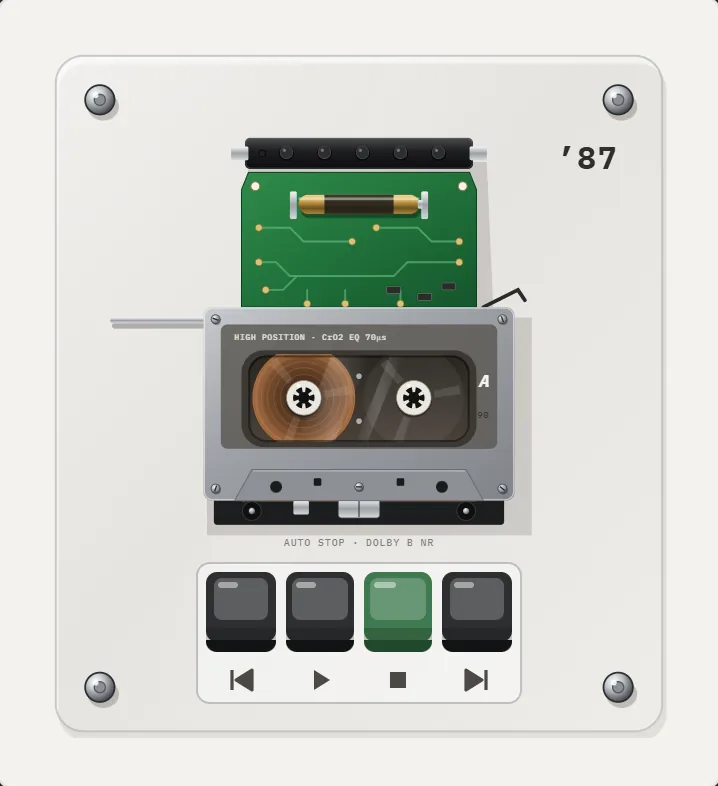
REWIND does not model the tape types. It gives you the effect side of tape on your own music: analog sound with tape saturation, wobble and hiss sliders, and a five-band equalizer with Flat, Warm, Bass, Vocal and Air presets. Open the analog sound feature or the equalizer, or meet the 1994 tape-ex900 machine.
Frequently asked questions
What is the difference between normal and chrome cassettes?
Chrome (Type II) tapes use a different coating, need higher bias and 70 microsecond equalization, and usually give a brighter, cleaner high end than normal (Type I) tapes.
How can I tell what type a cassette is?
Look at the notches on the top edge of the shell. Type I has only the write-protect tabs, Type II has an extra pair next to them, and Type IV metal has a third set near the middle.
Can I play a metal tape on any cassette player?
Usually yes. Most players can play it, but recording on metal needs a deck designed for it. A player that cannot switch to 70 microsecond equalization may sound dull.
What does C90 mean on a cassette?
C90 means 90 minutes of total playing time, 45 minutes per side. C60 holds 30 minutes per side and C120 holds 60 minutes per side.
Does REWIND have normal, chrome and metal tape settings?
No. REWIND is a player for your own audio files. It adds tape-style saturation, wobble and hiss with sliders and offers a five-band equalizer, but it does not simulate tape types.
Keep exploring
 Cassette players10 pocket cassette machines with turning reels, swipe-to-wind and tape stop.
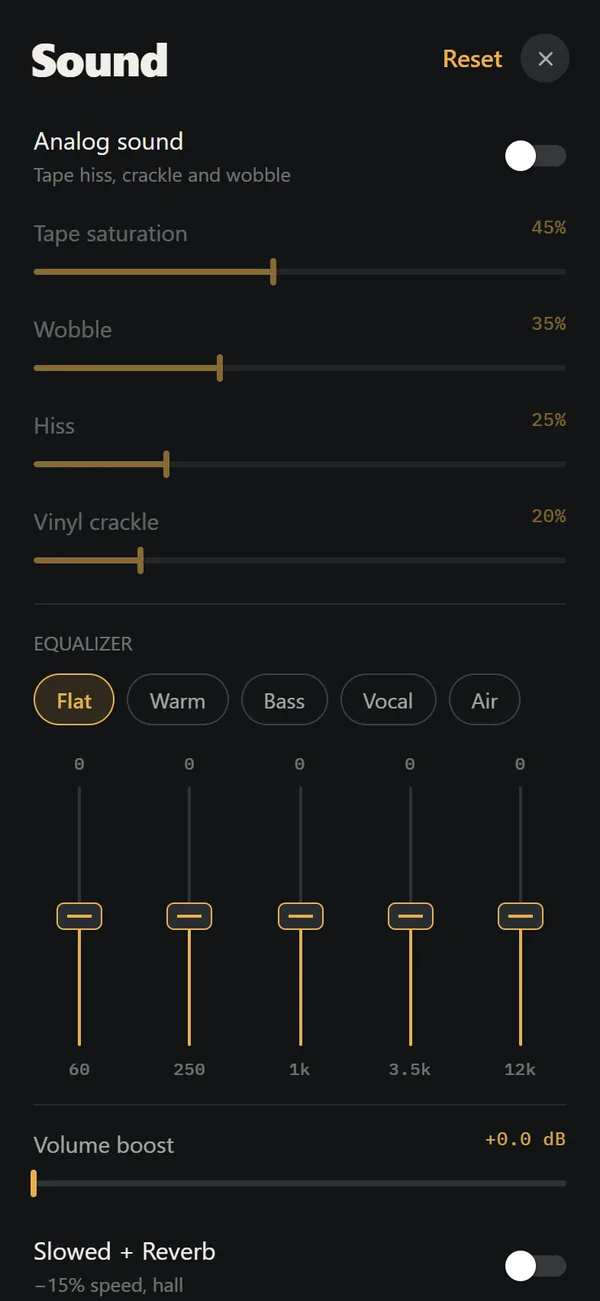 Analog Sound on iPhoneFour sliders (saturation, wobble, hiss, crackle), automatic machine sound and a lo-fi radio filter, live on your own files. Free.
 What Is Tape Saturation? The Sound of Magnetic TapeThe physics of tape saturation, why bias exists, what harmonics it adds, and how to set a tasteful amount.History of the Compact CassetteFrom a pocket-sized dictation tape in 1963 to the Walkman era and the modern revival: the dated history of the Compact Cassette.
 Why Cassettes Are BackReal numbers on the cassette revival: US and UK sales, who still makes tape, why people buy it, and what it cannot do.1994 Clear Cassette Player for iPhoneFully transparent cassette, visible gears and screws, dark label strip. A PRO ’94 machine.