REWIND
Reel-to-reel vs digital: which is actually better?
Digital is more accurate, cheaper and far easier. Reel-to-reel is more tactile and has a characteristic sound from tape saturation. A quarter-inch deck at 15 inches per second can sound excellent, but it needs tape, upkeep and skill. For most listening, digital wins on every measurable point.
Download free on iPhoneSee all 30 machines
8 machines free forever · no account · works offline
What is reel-to-reel, and how does it differ from digital?
Reel-to-reel, also called open-reel recording, spools magnetic tape between two reels. You thread the tape from a supply reel across guides and a head assembly onto an empty take-up reel. Consumer tape is 1/4 inch wide, and speeds are usually 3¾, 7½, 15 or 30 inches per second (Wikipedia: Reel-to-reel audio tape recording).
Digital audio stores the sound as numbers: samples, typically 44,100 times a second at 16 bits on a CD, or higher in files. It is copied exactly. Tape stores an analog magnetic pattern that gets slightly worse with each copy generation.
How do they compare on sound?
Tape performance depends on track width and speed. Wider tracks and faster speeds give better signal-to-noise ratio and frequency response, at the cost of using more tape. The compact cassette moves 3.8 mm tape at 1⅞ inches per second, far slower than a reel deck at 15 ips, which is why reel-to-reel beats cassette (Wikipedia: Cassette tape).
Against digital, the numbers favor digital. A 16-bit CD can deliver a theoretical dynamic range around 96 dB, while consumer analog tape without noise reduction is far lower, often quoted around 60 dB. Tape adds hiss, wow and flutter, and some distortion. Many artists still like tape because that distortion, called tape saturation, thickens bass and softens high peaks, an effect covered in what is tape saturation.
How long does a reel play?
Running time depends on reel size and speed. A 7-inch reel holds about 1,200 feet of standard tape, and the time per direction is the length divided by the speed.
| Tape speed | Time per 1,200 ft reel | Typical use |
|---|---|---|
| 3¾ ips | 64 minutes | Speech, long home recordings |
| 7½ ips | 32 minutes | Home music, pre-recorded tapes |
| 15 ips | 16 minutes | Studio and audiophile quality |
| 30 ips | 8 minutes | Professional mastering |
At 15 ips, a 7-inch reel runs 16 minutes, so a 20-minute album side needs a bigger reel or a slower speed. A phone holds weeks of music.
What does reel-to-reel cost and need?
There has been a revival, with restorers and tape makers back in business, and in 2018 the first new reel-to-reel player in over 20 years was released, according to Wikipedia. It remains a hobby.
- A working deck: used machines vary from modest to expensive, and good ones are serviced by specialists.
- Tape: new tape is made by few companies and costs far more per hour than digital storage. Old tape can shed its coating.
- Maintenance: heads, pinch rollers and brakes need cleaning and replacement, and belts perish.
- Space and weight: decks are large and heavy.
- Time: threading, rewinding, bias and level setting.
Why do people still choose reel-to-reel?
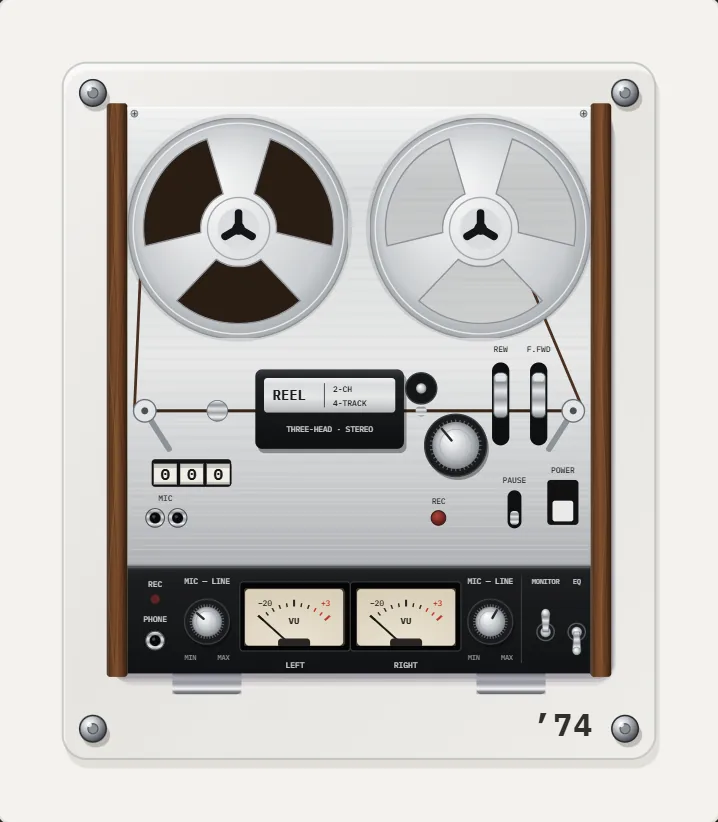
The reasons are the experience and the sound character. The reels turn, the tape visibly moves from one to the other, the VU needles dance, and you feel involved in the music. Producers use tape to add warmth and glue to a mix, then convert to digital for distribution. Collectors want to hear pre-recorded open-reel releases, which began in the United States in 1949.
For everyday listening with convenience, digital is the choice.
Is analog tape really warmer than digital?
Tape does not add warmth by magic. It adds distortion that happens to flatter music: a gentle compression of loud peaks, a rise in low harmonics and a slight softening of the top end. These effects grow when the signal is recorded hot. Digital can reproduce the same character with software, and plug-ins that model tape are common.
The effect is easy to hear when it is exaggerated, which is why analog sound in REWIND has sliders for saturation, wobble and hiss, so you can set how much you like.
Sound is only part of it. A reel deck is a machine you operate with your hands, and that changes how you listen: you pick a side, thread a tape and sit down. Digital removes that friction, which is its great strength and, for some, its weakness.
How do the formats compare for storing a music collection?
| Reel-to-reel | Digital files | |
|---|---|---|
| Copying | Each copy loses a little quality | Exact copies |
| Lifespan | Decades if stored well, but tape can shed | Indefinite with backups |
| Search | Wind and look | Instant |
| Size | A shelf for dozens of albums | A phone holds thousands |
| Cost per hour | High | Tiny |
Can I get the reel-to-reel look on my phone?
REWIND shows a 1974 home reel-to-reel with two 7-inch reels that turn while your song plays, the tape moving from one reel to the other, and VU meters that follow the music. The analog sound section lets you add tape saturation, wobble and hiss to your own files. It is an approximation of the look and character, not a tape recording, and REWIND does not record. See the reel-to-reel player page for details.
Frequently asked questions
Is reel-to-reel better than digital?
In measured accuracy, digital is better. Reel-to-reel offers a distinct tape sound and a physical experience, which many people prefer for taste, not for fidelity.
Is reel-to-reel worth it today?
As a hobby, yes, if you enjoy mechanical gear and can maintain it. As a practical way to listen to music, no.
What speed is best for reel-to-reel?
15 ips gives the best quality for home use, but 7½ ips is the common consumer speed and balances quality with tape usage.
How long does a reel of tape last?
A 7-inch reel holds about 32 minutes per direction at 7½ ips and 16 minutes at 15 ips. Properly stored tape lasts decades, though some old tapes need baking before play.
Can I use an iPhone to record to reel-to-reel?
Yes, by connecting the phone's headphone output (through an adapter, on recent iPhones) to the deck's line input and setting the record level by the meters. REWIND itself does not record.
Keep exploring
Reel-to-reelA 1974 reel-to-reel with walnut panels, moving tape and twin VU meters.1974 Reel-to-Reel Tape Recorder App for iPhoneWalnut panels, two 7-inch aluminum reels, chrome levers, mechanical counter and twin VU meters. PRO.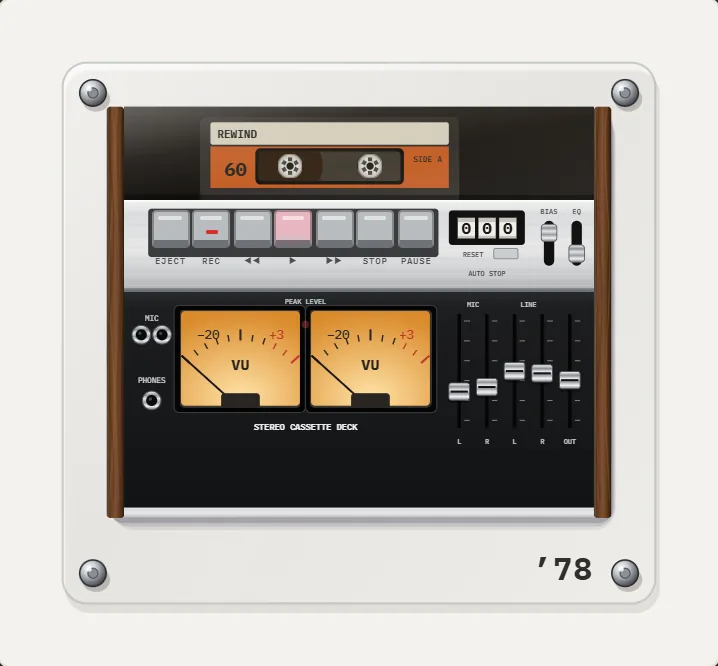 What Is Tape Saturation? The Sound of Magnetic TapeThe physics of tape saturation, why bias exists, what harmonics it adds, and how to set a tasteful amount.
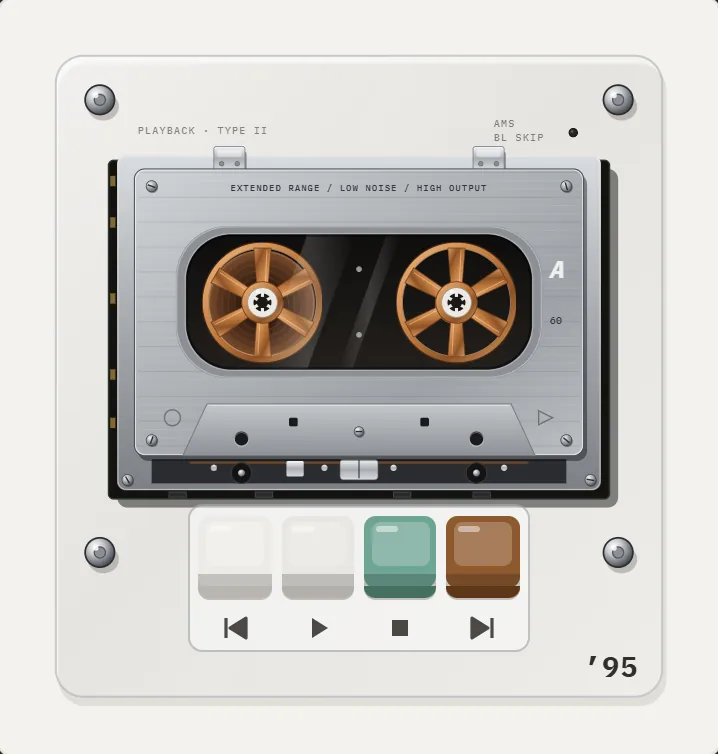 History of the Compact CassetteFrom a pocket-sized dictation tape in 1963 to the Walkman era and the modern revival: the dated history of the Compact Cassette.
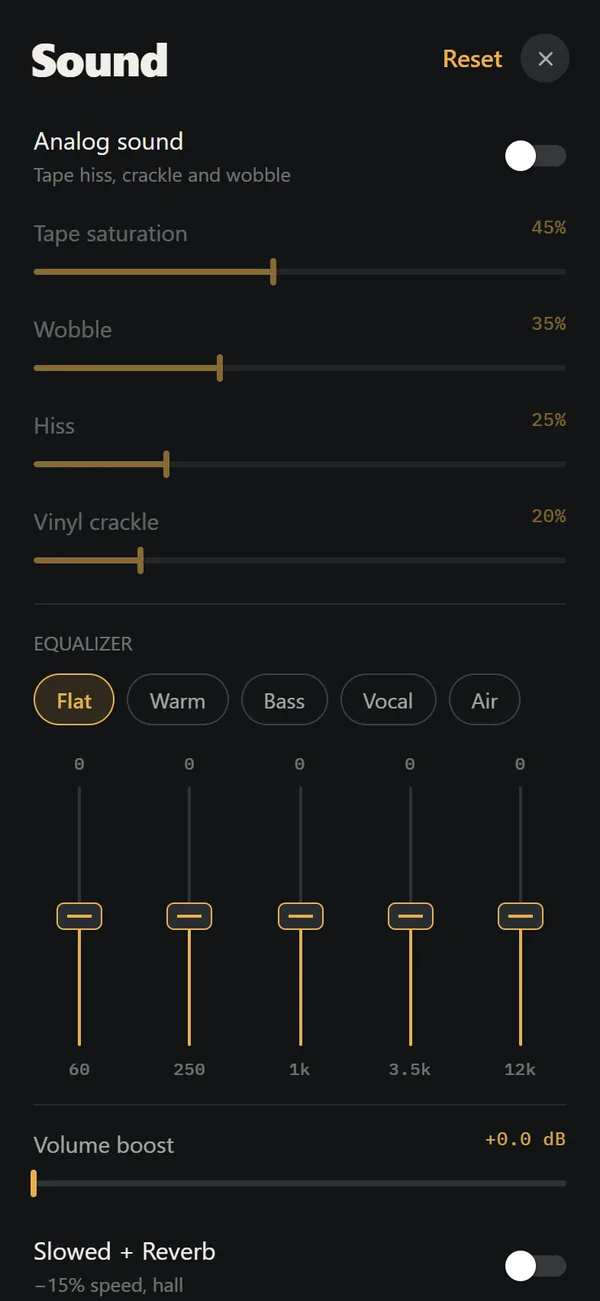 Analog Sound on iPhoneFour sliders (saturation, wobble, hiss, crackle), automatic machine sound and a lo-fi radio filter, live on your own files. Free.Cassette decksA 1978 walnut-sided cassette deck with piano keys, counter and two amber VU meters.